
Table of Contents
- Why Structured Driving Practice Matters for Confidence
- Understanding Supervised Driving Hours Requirements by State
- Building a Progressive Driving Curriculum: From Parking Lots to Highway
- Driving Practice Drills for Beginners: Skill-by-Skill Mastery
- Tips for Parents Teaching Teens to Drive Without the Stress
- Using a Teen Driving Practice Log Template to Track Progress
- Preparing for the Road Test: Readiness and Evaluation
- Frequently Asked Questions
Last Updated: October 5, 2026
Why Structured Driving Practice Matters for Confidence
The difference between a nervous learner and a confident driver isn't talent, it's knowing exactly what to practice and how to practice it.
Structured driving practice changes that dynamic. Instead of hoping practice works, you build it intentionally. You move from one skill to the next in a logical sequence.
This guide walks you through how to build and execute structured driving practice that actually works.
Understanding Supervised Driving Hours Requirements by State
Every state sets its own rules for supervised driving hours before a teen can take the road test. These requirements vary significantly, some states require 45 hours, others 50, and a few have different minimums depending on the teen's age or whether they completed a formal driver education course.
Your first step is to verify your state's exact requirements. Contact your local Department of Motor Vehicles or Motor Vehicle Administration to confirm:
- Total supervised hours required (often broken into daytime and nighttime minimums)
- Whether classroom instruction or professional behind-the-wheel lessons count toward the total
- How hours are verified or documented
This matters because not all practice hours count equally in every jurisdiction. Some states require specific conditions, like a minimum number of nighttime hours or highway miles. Others accept any supervised driving.
Building a Progressive Driving Curriculum: From Parking Lots to Highway
The best structured driving practice follows a clear progression. You don't teach highway merging before the learner can control the vehicle in a straight line. You don't practice night driving before they've mastered daylight conditions. A progressive curriculum builds skills in the right order, with each stage preparing the learner for the next.
Stage 1-3: Vehicle Control and Basic Maneuvers
The first practice sessions focus entirely on vehicle familiarity and basic control. The learner should feel the steering, braking, and acceleration in a low-pressure environment. Empty parking lots are ideal for this phase.
In these early sessions, practice:
- Starting and stopping smoothly
- Steering at different speeds
- Braking with gentle, even pressure
The goal is mechanical confidence. By the end of this initial stage, the learner should handle the pedals and wheel without overthinking. They should feel the vehicle, not fight it.
Stage 4-6: Residential Streets and Light Traffic
Once basic vehicle control is solid, move to residential streets with light traffic. These roads offer real-world conditions, other vehicles, pedestrians, stop signs, turns, without the intensity of busy intersections or highway speeds.
Practice:
- Turning smoothly and staying in your lane
- Stopping at stop signs and red lights with proper distance
- Yielding at intersections
This phase builds decision-making skills. The learner begins to recognize hazards and react appropriately. They practice right-of-way rules in realistic but manageable situations.
Stage 7-10: Highway, Night, and Challenging Conditions
The final stages introduce highway driving, nighttime conditions, and variable weather or traffic. By this point, the learner has logged substantial practice and should feel ready for these more demanding environments.
Practice:
- Merging onto highways and maintaining speed
- Passing other vehicles safely
- Driving at night with proper headlight use and reduced visibility
These stages prepare the learner for the conditions they'll face after licensing. Nighttime and highway driving often feel foreign to new drivers because they've had limited exposure. Structured practice in these conditions before the road test builds real confidence.
Driving Practice Drills for Beginners: Skill-by-Skill Mastery
Beyond the broad stages, specific drills target individual skills. These drills let you isolate one skill, practice it repeatedly, and measure improvement. A drill might focus on lane control, parking accuracy, or hazard recognition. The learner practices the same skill across multiple sessions until it becomes automatic.
Steering, Braking, and Lane Control
Lane control drill: Drive a straight road at a steady speed while maintaining center position in the lane.
Braking drill: Practice stopping from different speeds, 25 mph, 35 mph, 45 mph, at marked points. The learner should brake smoothly, without jerking or stopping too abruptly.
Acceleration drill: Practice smooth acceleration from a stop to 30 mph. Many new drivers accelerate too quickly or unevenly.
Parking, Backing Up, and Turning
Straight backing drill: In an empty parking lot, practice backing straight for 30 feet. Use cones or parking spaces as guides.
Parallel parking drill: Set up two cones or use two parking spaces. Practice pulling into a space parallel to the curb.
Turning drill: Practice 90-degree turns in parking lots. Focus on smooth steering, appropriate speed, and staying within lane boundaries.
Intersections, Right-of-Way, and Hazard Perception
Intersection approach drill: Drive toward an intersection and practice stopping at the stop line, looking both ways, and proceeding safely.
Right-of-way drill: Practice scenarios where the learner must yield, to pedestrians, oncoming traffic, or vehicles already in an intersection.
Hazard perception drill: Drive through residential neighborhoods and have the learner call out hazards, parked cars, children playing, cyclists, driveways.
These drills transform practice from passive seat time into active skill building.
Tips for Parents Teaching Teens to Drive Without the Stress
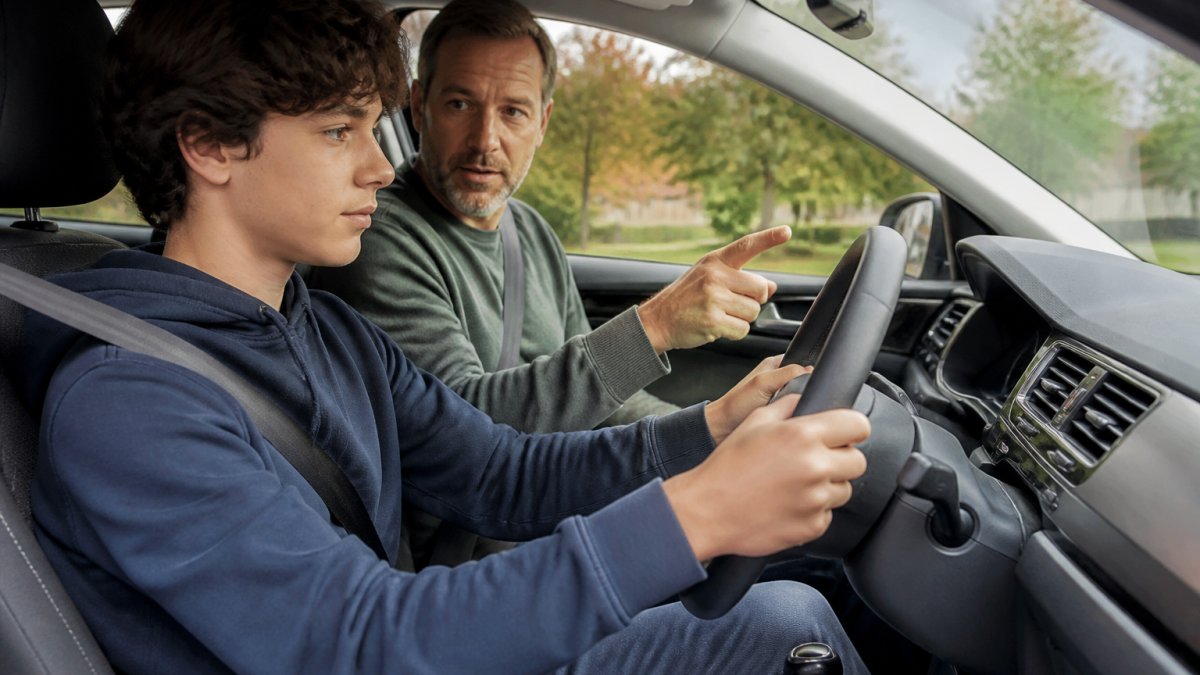
Teaching your teen to drive tests patience like few other tasks. The stakes feel high. Your teen is nervous. You might be nervous too.
Structured driving practice, paired with clear communication agreements, reduces that stress dramatically.

Setting Expectations with a Calm-Car Agreement
Before the first practice drive, establish a calm-car agreement with your teen. This is a simple conversation, ideally written down, where you both agree on how you'll communicate during practice.
The agreement might include:
- You will give feedback calmly, without yelling or sharp criticism
- Your teen will listen to feedback without getting defensive
- If emotions escalate, you'll pause the session and resume later
This agreement removes ambiguity. The conversation shifts from emotional to collaborative. Mindset Behind the Wheel on TeachClub explores this communication dynamic in depth, helping parents and teens understand the psychology of learning under pressure and how to maintain a productive mindset throughout practice.
Managing Anxiety and Building Confidence
Many new drivers, especially anxious ones, need more encouragement and less correction. A parent's instinct is often to point out every mistake.
Instead, practice a 3:1 ratio: three pieces of positive feedback or observation for every one correction.
Anxiety also improves with repetition in safe conditions. If your teen is nervous about highway driving, don't jump straight to rush-hour traffic.
What to Do When a Practice Drive Goes Wrong
Some practice drives will feel like failures. Your teen gets flustered at an intersection. They misjudge a turn. They forget to signal.
Instead, pause. Ask what happened from their perspective. Often, the learner already knows what went wrong and is already frustrated with themselves.
If a practice session becomes too stressful, for either of you, stop. Pull over safely and take a break.
Using a Teen Driving Practice Log Template to Track Progress
A practice log serves two purposes: it documents hours for licensing requirements, and it tracks what skills were practiced and how well. Without a log, you lose the ability to see progress over time. With one, both parent and teen can see exactly how far they've come.
What to Log: Hours, Conditions, and Skills Practiced
A useful practice log includes:
- Date and total duration of the session
- Road types practiced (parking lot, residential, highway, etc.)
- Weather and lighting conditions (day, night, rain, clear)
This level of detail transforms a log from a bureaucratic requirement into a coaching tool. When you review the log after 10 sessions, you see patterns. Your teen has mastered parking but still struggles with highway merging. That insight guides the next week's practice plan.
Digital Tools vs. Paper Logs: Building Accountability
Some parents use paper logs. Others use digital tools. The advantage of digital logs is that they're harder to falsify, easier to organize, and often include prompts that ensure complete information.
LearnerMiles on TeachClub includes a digital practice log designed specifically for this purpose.
Whether you use paper or digital, consistency matters more than the format. Log every session. Review the log weekly. Use it to plan the next week's practice.
Preparing for the Road Test: Readiness and Evaluation
The road test is the finish line. By the time your teen takes it, they should feel ready.
In the final weeks before the test, review your practice log. Which skills have the most logged hours?
Many licensing authorities publish the specific skills tested on the road test. Study that list with your teen.
Confidence on test day comes from preparation, not luck. Structured practice ensures that preparation is thorough.
Explore LearnerMiles on TeachClub to see how guided lessons outline exactly what to practice each week, how a digital practice log tracks progress automatically, and how a calm-car communication agreement keeps practice sessions productive.
Frequently Asked Questions
How many supervised driving hours does my teen actually need?
Supervised driving hours requirements vary significantly by state. Most states require between 20 and 100 hours of supervised driving before a teen can take the road test, with many requiring at least 45 hours. Some states also mandate a minimum number of night-driving hours. Check your state's DMV or licensing authority website for exact requirements. Structured driving practice helps you meet these hours while building real skills, not just logging time.
What are the best driving practice drills for beginners?
Start with vehicle control: steering, braking, and smooth acceleration in empty parking lots. Progress to basic maneuvers like parking, backing up, and three-point turns. Then move to residential streets to practice lane positioning, stopping at signs, and basic intersections. Gradually introduce busier roads, highway merging, and night driving. Each drill should focus on one skill until your teen demonstrates consistent control before moving to the next level. A structured progression prevents overwhelm and builds real confidence.
How can I help my anxious teen driver build confidence during practice?
Start in low-stress environments and build gradually. Use a Calm-Car Agreement to set clear expectations and reduce conflict. Offer specific, encouraging feedback rather than criticism. Practice the same routes multiple times so they feel familiar. Take breaks if frustration builds. Acknowledge small wins: successful lane changes, smooth turns, or handling a tricky intersection. Many anxious drivers benefit from knowing exactly what they'll practice each session and why. Structured, predictable practice reduces the anxiety of guessing what comes next.
What should I track in a teen driving practice log?
Log the date, time of day, duration, weather conditions, road types (residential, highway, night), and specific skills practiced (parking, intersections, lane changes). Note your teen's confidence level and any challenges they faced. Digital practice logs make it easy to see patterns and progress over time. Many teens respond better to visual evidence of improvement than vague praise. A good log also helps you prepare for the road test by identifying which skills need more work before test day.
How do I know if my teen is ready for the road test?
Readiness goes beyond logging hours. Your teen should demonstrate smooth vehicle control, confident decision-making at intersections, awareness of hazards, proper following distance, and calm responses to unexpected situations. They should handle the specific road conditions they'll face on the test. Review your practice log: if they've logged required hours and consistently performed well across all skill areas, they're likely ready. Many structured programs include readiness checks to help you assess whether they're truly prepared, not just time-ready.
What's the difference between just logging hours and structured driving practice?
Simply driving for hours doesn't guarantee skill development. Structured practice focuses on specific skills in a planned progression: starting with basics, building gradually, and practicing under different conditions. It includes clear goals, feedback, and a way to track which skills your teen has truly mastered. Unstructured hours can reinforce bad habits or miss critical skills entirely. Structured practice ensures your teen actually develops the decision-making, hazard perception, and vehicle control they need to drive safely, not just rack up time behind the wheel.
How do I handle conflict during a practice drive?
Establish a Calm-Car Agreement before you start driving: agree on communication rules, when to pull over if emotions run high, and how to give feedback. If tension builds, pause the session and discuss what happened calmly. Separate the driver from the mistake: focus on the action, not the person. Use a structured debrief after drives to review what went well and what to improve. Many parents find that having a plan for difficult moments, rather than reacting, makes practice sessions far less stressful for both of you.