

Table of Contents
- How Online Drivers Ed Actually Works
- Drivers Ed Course Requirements by State and Age
- How Long Is Drivers Ed Online?
- Choosing a DMV-Approved Course: What to Check Before You Enroll
- Teen Driving Practice Logs: Why They Matter More Than the Course
- Accessibility, Accommodations, and Mobile-First Learning
- Cheap vs. Premium Courses: What the Price Difference Actually Buys
- Frequently Asked Questions
Last Updated: September 23, 2026
How Online Drivers Ed Actually Works
Online drivers ed is a state-approved driver education program delivered through a web platform, where students complete coursework, quizzes, and a final exam at their own pace instead of in a classroom. This guide from LearnerMiles covers what the course involves, how long it takes, and how to pick a program that satisfies your state's licensing requirements.
Self-Paced Modules vs. Virtual Classroom Sessions
Two formats dominate. Self-paced modules let students log in and out whenever they want, suiting busy schedules and letting a nervous learner repeat a lesson without an audience. Virtual classroom sessions run on a fixed schedule with a live instructor, adding accountability but removing flexibility.
Drivers Ed Course Requirements by State and Age
Course requirements vary by state and age, and getting this wrong is the most common reason families repeat a step. Most states require a driver education course for teens under 18; adults often can skip it or take a shorter version.
- The minimum age to start a driver education program
- Whether the course must be completed before or after obtaining a provisional learner's permit
- How many instructional hours the state requires
Teen vs. Adult Eligibility
Teens typically must complete a full driver education program, hold a learner's permit for a set period, and log supervised practice hours before the road test. Adults usually face fewer course requirements but still need to pass the written knowledge test and driving exam.
How Long Is Drivers Ed Online?
Most online drivers ed courses take 30 to 40 hours, depending on your state's instructional hour requirement. Self-paced students often spread that over several weeks; students on a deadline can finish faster.
Choosing a DMV-Approved Course: What to Check Before You Enroll
Approval is neither universal nor permanent. A course approved in one state may not satisfy another's requirements, and a provider can lose approval if its curriculum falls out of step with a state's instructional-hour rules. Before you pay, verify the provider against your state's current approved-provider list, not a cached blog post or the provider's own marketing page.
Run through this checklist before you enroll:
- Confirm the provider appears on your state's current approved-provider list (check the date on the list itself)
- Verify the course covers your state's specific traffic laws, not a generic national curriculum
- Check how the certificate of completion is delivered, electronic, mailed, or both
- Confirm the course works on the phone or tablet your teen actually uses
- Ask whether the provider reports completion directly to the motor vehicle department
- Read the refund and retake policy in writing before you pay
The Hidden Fees Nobody Advertises Up Front
The sticker price is rarely the real price. A low headline rate often excludes the items below. Ask for each in writing before you enroll:
- Certificate shipping. Electronic delivery is often free; a printed, sealed certificate can add a shipping charge, and expedited shipping adds more.
- Expedited processing. If you need the certificate filed within a set number of days, some providers charge a rush fee.
- Retake fees. If the student fails the final exam, does the provider let them retake it free, or charge per attempt?
- State filing fees. Some states charge the provider (and pass the cost to you) to log completion in the licensing system.
- Instructor add-ons. Access to a live instructor for a stuck lesson is sometimes a separate purchase, not part of the base course.
Post-Course Success: What to Ask About the Written Test
Most providers advertise 'DMV-approved' and stop there. Very few publish what actually matters: how well their students do on the state written knowledge test on the first attempt. Providers that publish that data usually do so because the numbers are good.
- Does the final exam mirror the format and question style of your state's actual written test, or is it a generic multiple-choice quiz?
- Does the course include a readiness check, a practice test scored against your state's passing threshold, before the student attempts the real exam?
Reporting and Record-Keeping
Once the course is done, the record must reach the right place. Confirm in advance:
- Whether the provider reports completion electronically to your state's motor vehicle department, or whether you must submit the certificate yourself
- How long electronic reporting typically takes (same-day, a few business days, or longer)
- What happens if the record does not appear in the state system, who you call, and how quickly they respond
Teen Driving Practice Logs: Why They Matter More Than the Course
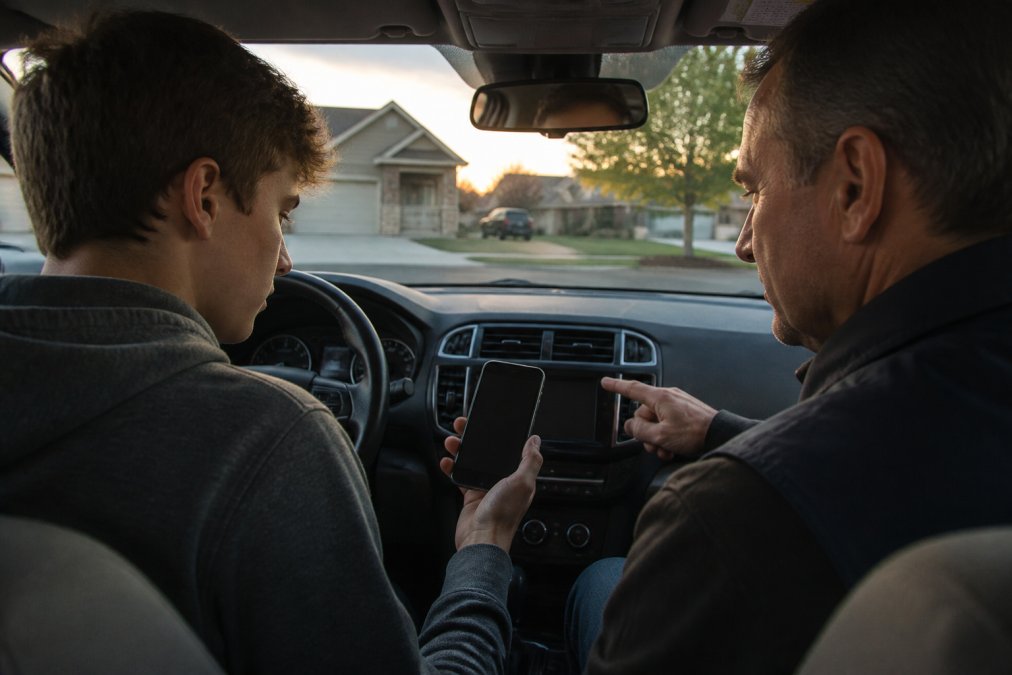
A practice log is a written record of supervised behind-the-wheel hours, signed by a parent or coach, that most states require before a teen can take the road test. The course teaches the rules. The log proves the student actually drove.
Accessibility, Accommodations, and Mobile-First Learning
Accessibility is the angle most providers handle poorly, and the one that matters most to families who need it. A student with a reading difficulty, attention challenge, or anxiety diagnosis does not need a course that merely 'works', they need one built with accommodations from the start, not bolted on after a complaint.
What 'Accommodations' Actually Means in a Course
Accommodations in an online course are not the same as accommodations on the road test. The course-side accommodations to look for include:
- Audio narration of every lesson, not just the introduction, so a student with a reading difficulty can listen instead of read
- Adjustable text size and contrast, including a high-contrast or dark mode
- Pause-and-resume at any point, so a student who loses focus can stop and return without losing progress
- Extended time on the final exam, and the ability to retake it without penalty
- Chunked modules short enough to complete in one sitting, which matters for students with attention challenges
- No timed gates that force a student to finish a section within a set number of minutes
The Legal Framework Families Should Know
Public schools and postsecondary institutions receiving federal funding must provide accessible materials under Section 504 of the Rehabilitation Act and the Americans with Disabilities Act. Private online course providers are generally covered by the ADA's public-accommodation provisions, so a provider that refuses a reasonable accommodation is on shaky ground. If a provider says they 'cannot' accommodate a documented need, ask for that refusal in writing and consider a different provider.
Mobile-First Learning: What to Actually Test
Mobile access matters as much as accommodations. A teen who can complete a module on a phone during a free period is far more likely to stay on schedule than one who needs a laptop. But 'works on mobile' is not 'built for mobile.' Test these before you commit:
- Does the course run in a browser, or does it require a downloadable app? Browser-based courses work on any device; app-only courses lock out students on a different platform.
- Does it require Flash or Java? Both are dead technologies. A course that still depends on either will not run on a modern phone or tablet at all.
- Can the student take the final exam on a phone? Some providers let students study on mobile but require a desktop for the proctored final. That is a trap for a student who only has a phone.
- Does progress sync across devices? A student who starts a module on a phone and finishes on a laptop should not lose their place.
- How much data does a module use? A course heavy on video can burn through a limited data plan quickly. Look for a low-bandwidth or audio-only option.
Why This Is the Differentiator
Most providers treat accessibility and mobile support as fine print. For a family that needs either, that fine print is the whole decision. A course with audio narration, extended exam time, and a genuinely mobile-first platform removes the two biggest practical barriers to finishing, and finishing is the only outcome that matters.
Cheap vs. Premium Courses: What the Price Difference Actually Buys
Price differences between online drivers ed courses come down to three things: state approval, support, and what's included beyond the course itself.
| What You're Comparing | Lower-Cost Courses | More Complete Programs |
|---|---|---|
| State approval | Varies by provider | Often approved in multiple states |
| Practice logging | Paper or none | Built-in digital tracker |
| Instructor access | Varies by provider | Available when needed |
| Readiness checks | Rarely offered | Common |
| Support if you fail | Varies by provider | Varies by provider |
Frequently Asked Questions
Is online drivers ed state-approved in my area?
Approval varies by state. Some motor vehicle departments accept online courses for the written knowledge test requirement, while others only accept them for teens under a certain age or require an in-person component. Before enrolling, check your state's motor vehicle department website for a list of approved providers. A course that issues a certificate of completion from an approved program can usually be submitted when you apply for a learner's permit or driver license.
How long does it take to complete an online drivers ed course?
Most state-mandated courses run 30 hours of instructional time, which works out to roughly two to six weeks for a typical student. Self-paced programs let teens spread those hours across evenings and weekends, while some states cap how many hours you can log per day. Adult courses are often shorter. Your actual timeline depends on your state's instructional hour requirement and how consistently your teen logs in.
Do I still need behind-the-wheel training after online drivers ed?
Yes, in nearly every state. Online drivers ed covers traffic safety education, road signs, and written test prep, but it does not replace supervised driving hours. Teens typically need 30 to 50 hours of behind-the-wheel practice, including several hours at night, before the road test. A practice log and a structured plan for those drives matter as much as the course itself.
Can parents use online tools to supplement teen driving practice?
They can, and many do. A structured program with guided lessons, a shared practice log, and readiness checks gives parents a clear script for each drive instead of improvising. It also reduces the friction that comes up when a parent and teen disagree about what to practice next. Look for tools that let both of you see progress and set expectations before you get in the car.