
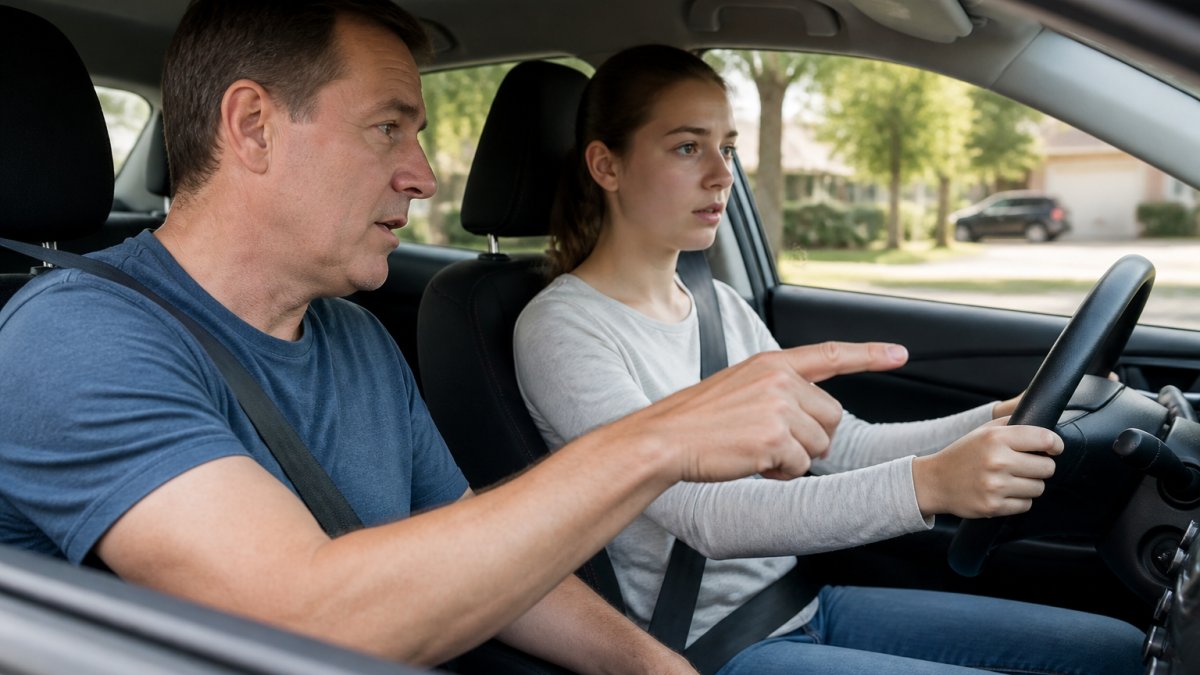
Table of Contents
- Understanding Your Teen's Driving Anxiety
- How to Help a Teen with Driving Anxiety Before Getting Behind the Wheel
- What to Say to a Nervous Teen Driver During Practice
- Creating a Teen Driving Practice Plan That Builds Confidence
- How Long Should Teen Driving Practice Sessions Be
- Staying Calm as the Parent or Instructor
- Recognizing When Your Teen Needs Additional Support
- Tracking Progress and Building Readiness
- Frequently Asked Questions
Last Updated: October 4, 2026
Understanding Your Teen's Driving Anxiety
Driving anxiety in teens is real, genuine fear that can freeze them behind the wheel, not just nerves or low confidence. Learning how to teach nervous teen driver requires understanding this distinction.
The anxiety comes from multiple sources: fear of mistakes, worry about hurting someone, pressure from watching parents, and awareness of traffic risks.
What works is structure, clear expectations, and a plan that builds confidence step by step, not reassurance alone.
How to Help a Teen with Driving Anxiety Before Getting Behind the Wheel
The work starts before your teen sits in the driver's seat. Mental preparation matters as much as physical skill.
Set Clear Expectations with a Calm-Car Agreement
Before the first lesson, sit down together and agree on how you'll both behave in the car.
A Calm-Car Agreement is a simple conversation where you and your teen establish ground rules, a shared understanding, not a formal contract.
Here's what to cover:
- Your role: You will give clear instructions, not yell, and stay calm no matter what happens
- Their role: They will focus on driving, ask questions if confused, and tell you if they feel overwhelmed
- What success looks like: Completing the planned route without panic, not perfection
- How you'll give feedback: Calmly, after the drive, focusing on what went well first
- What happens if anxiety spikes: You'll pull over, take a break, and talk through what triggered it
This agreement removes guesswork. Your teen knows exactly what to expect. You know what you're committing to. That clarity alone reduces anxiety.
Prepare Mentally Before the First Lesson
The night before the first drive, ask what they're most worried about and listen without dismissing their concerns. Walk through the route together on a map or as a passenger. Many anxious drivers benefit from visualization: have them imagine executing each step smoothly before attempting it.
What to Say to a Nervous Teen Driver During Practice
Your words matter more than you think. What you say in the car shapes whether your teen feels supported or judged.
Use Calm, Clear Instructions
Give one instruction at a time. Not five at once.
Instead of five instructions at once ("turn left, watch traffic, signal, avoid that car"), give one: "When the light turns green, turn left." Pause. Then: "Good. Now straighten out and find your lane."
Calm, clear, one step. This is how anxious brains learn best.
Avoid vague or dismissive phrases ("Be careful," "Just relax," "Everyone can do this"). Use specific, reassuring ones: "You've got this," "That was smooth," "Let's try that again," "I'm right here."
Respond to Mistakes with Constructive Feedback
Your teen will make mistakes. A wide turn. A hesitation. A jerky brake. These are learning moments, not failures.
When a mistake happens, pause and respond calmly: "You turned a bit wide. That's normal. Next time, start your turn earlier." Name what happened, normalize it, and give a specific fix. Anxious teens already punish themselves; they need to know mistakes are fixable.
Creating a Teen Driving Practice Plan That Builds Confidence
A good practice plan moves from easy to harder, gives a sense of progress, and defines readiness by skills demonstrated, not just time spent.
The Five-Stage Practice Progression
Stage 1: Vehicle Familiarity & Basic Control (Empty Parking Lot)
Goal: Learn how the car responds to steering, braking, and acceleration without traffic pressure.
Skills to practice: Starting and stopping smoothly, steering in straight lines, gentle turns, braking with gradual pressure, parking (forward and reverse).
Readiness to advance: Steers without jerking, brakes smoothly, completes parking consistently over 3-4 sessions, reports feeling calm or neutral.
Stage 2: Quiet Residential Streets (Low Traffic)
Goal: Apply basic control skills on real roads with minimal distractions.
Skills to practice: Maintaining lane position, stopping at stop signs, checking mirrors and blind spots, responding to parked cars and pedestrians.
Stage 3: Main Roads with Moderate Traffic & Traffic Lights
Goal: Navigate busier environments and respond to traffic signals.
Skills to practice: Responding to traffic lights, merging into moving traffic, adjusting speed based on traffic flow, making left turns across oncoming traffic.
Stage 4: Complex Intersections, Highway Merging & Night Driving
Goal: Handle multi-lane decisions, highway entry/exit, and reduced-visibility conditions.
Skills to practice: Merging onto highways, exiting highways, navigating multi-lane intersections, driving in low-light conditions with proper headlight use.
Stage 5: Heavy Traffic, Unfamiliar Areas & Varied Conditions
Goal: Drive independently in challenging, unpredictable environments.
Skills to practice: Navigating heavy traffic, using GPS while driving, adapting to unexpected road conditions, recovering from mistakes, making decisions independently.
How to Use This Framework
Track skills, not just time. After each session, note which skills went well and which need work. Use readiness criteria to decide whether to repeat or advance.
Repeat stages as needed. Some teens spend 4 sessions in Stage 2; others need 10. Rushing creates setbacks; thorough practice builds lasting confidence.
Celebrate milestones. When your teen masters a stage, acknowledge it: "You've mastered quiet streets. You're ready for busier roads."
Adjust for individual pace. High-anxiety teens may need more repetition; experienced drivers may move faster. Follow demonstrated readiness, not a calendar.
LearnerMiles's digital practice log tracks these skill milestones automatically, so you can see patterns and know exactly when your teen is truly ready to advance.
How Long Should Teen Driving Practice Sessions Be
Short sessions work better than long ones for anxious learners. A 20-30 minute session is ideal for early lessons; after 30 minutes, fatigue sets in and mistakes increase. As confidence builds, extend to 45 minutes or an hour.
Simple structure: 5-minute review, 20-25 minutes driving, 5-minute debrief. This prevents overwhelm and reinforces what went well.
Staying Calm as the Parent or Instructor
Your teen's anxiety mirrors yours. If you're tense, they feel it.
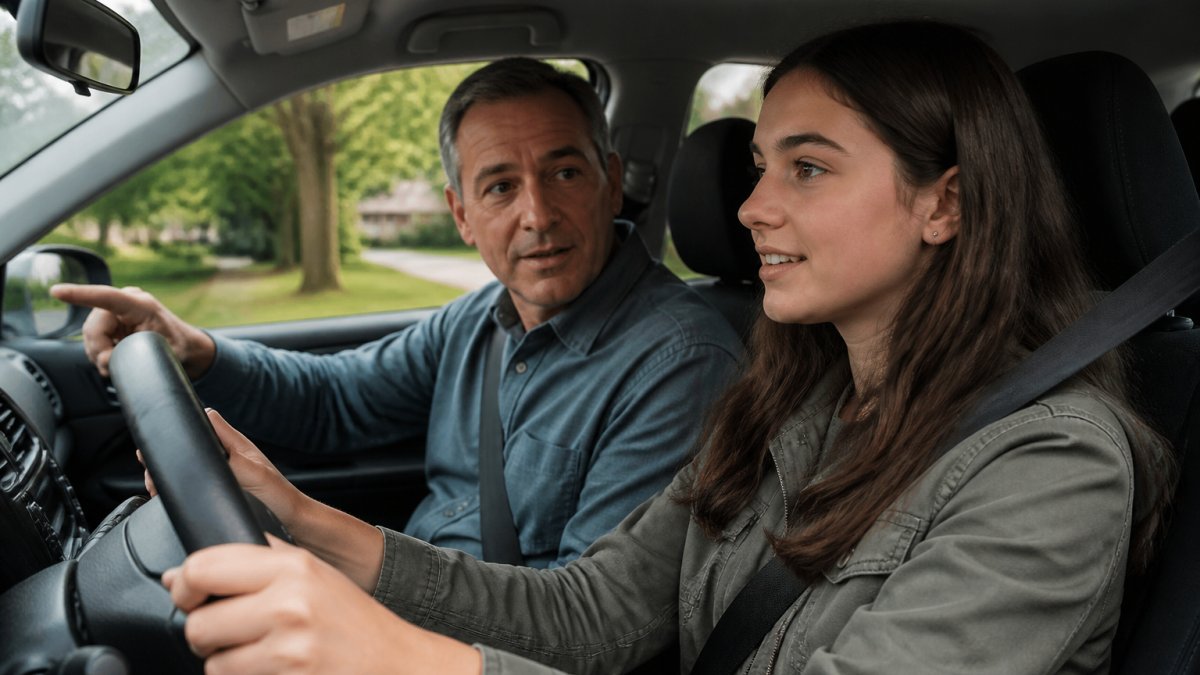
Before you get in the car, check yourself. Are you anxious about their driving? Are you frustrated from a bad day? Are you gripping the door handle?
If you're not calm, postpone the lesson. Seriously. A lesson taught while you're stressed teaches your teen that driving is scary. That's the opposite of what you want.
When you are in the car, focus on breathing. Slow, deep breaths. Your teen will notice. It signals safety.
Don't backseat drive. Don't grab the wheel. Don't gasp when they approach a turn. Don't narrate every move. These habits spike anxiety.
Instead, sit quietly. Let them drive. Give feedback when asked or when truly necessary.
Remember: your job is not to be a perfect instructor. It's to be a calm, steady presence. That alone reduces your teen's anxiety more than perfect technique ever could.
Recognizing When Your Teen Needs Additional Support
Some anxiety is normal. Some anxiety needs professional help. And some anxiety spikes suddenly in the car, and you need to know what to do in that moment.
Normal vs. Clinical Driving Anxiety
Normal anxiety: nervousness before lessons, asking questions, needing extra practice, preferring quiet routes, feeling proud after success.
Anxiety needing professional support: panic attacks (racing heart, difficulty breathing), severe avoidance, intrusive accident thoughts that persist, physical symptoms (nausea, trembling) that don't improve, worsening anxiety despite exposure, or symptoms interfering with school, sleep, or daily life.
If you see signs of clinical anxiety, talk to your teen's doctor. A therapist can teach coping strategies, grounding techniques, breathing exercises, cognitive reframing, that complement practice sessions. This isn't a failure; it's recognizing that some teens need extra tools.
What to Do During an Acute Anxiety or Panic Response
If your teen feels anxious or panicked:
-
Stay calm. Your steady voice and slow breathing signal safety. Do not gasp, grab the wheel, or raise your voice.
-
Give clear permission to stop. Say: "Pull over whenever you're ready." Validate their experience; don't say "Just keep going" or "You're fine."
-
Guide them to a safe spot. If in traffic, help them find a safe shoulder or parking lot. If frozen, gently guide: "Turn the wheel left. Now ease off the gas."
-
Once stopped, pause the lesson. Turn off the engine and sit quietly. Do not immediately problem-solve.
-
Use grounding techniques. For acute panic, guide them through: 5-4-3-2-1 method (name 5 things you see, 4 you can touch, 3 you hear, 2 you smell, 1 you taste) or box breathing (in for 4 counts, hold 4, out 4, hold 4; repeat 5 times).
-
Talk through the trigger. Once calmer, ask: "What happened right before you felt panicked?" Understanding the trigger helps you prepare differently next time.
-
Decide together whether to continue. Options: sit 10 minutes then try a short drive, head home and try again in a few days, or practice breathing once more then retry the route.
-
Debrief later. Without judgment, discuss what happened: "That was scary. You handled it by telling me. That took courage. Next time, we can try [specific strategy]." This normalizes anxiety as something to manage.
What NOT to do: Don't say "Calm down" or "Don't be nervous." Don't shame them. Don't take over the wheel unless there's immediate danger. Don't schedule another lesson immediately after a panic episode. Don't ignore it, unprocessed panic reinforces avoidance.
When to Pause Driving Practice
If your teen experiences panic or severe anxiety more than once, or if anxiety prevents practice, pause lessons and consult a healthcare provider. A therapist can help develop coping skills before resuming. Many teens return with greater confidence after professional support. Your local licensing authority can provide information about accommodations or alternative pathways; requirements vary by jurisdiction.
Tracking Progress and Building Readiness
Keep a simple log after each session: route, duration, key skills, how they felt, what went well, and what to work on next. Review every few weeks to show progress ("I was terrified of left turns three weeks ago; now I'm doing them smoothly"). Use the log to decide when to progress.
LearnerMiles includes a digital practice log that tracks these details automatically, removing guesswork about readiness to advance.
Teaching a nervous teen driver takes patience. It takes structure. It takes your own calm. But it works.
The goal isn't a perfect driver. It's a confident one. Someone who trusts themselves behind the wheel and knows what to do when things get hard.
Start with the Calm-Car Agreement. Keep practice sessions short and low-pressure. Give clear, calm feedback. Track progress. And stay steady yourself.
Ready to build a structured practice plan? Explore LearnerMiles's guided lessons and digital practice log at learnermiles.com. We've designed it specifically for anxious learners and the parents who support them.
Frequently Asked Questions
How do I help my teen feel less nervous about driving?
Start by acknowledging their nervousness as normal. Build confidence gradually through short, low-pressure practice sessions in familiar areas. Use positive feedback, set clear expectations together, and maintain a calm tone. A structured practice plan with measurable milestones helps teens see their progress. Avoid parental pressure or criticism, which can increase anxiety. If nervousness interferes with learning or causes panic responses, consider working with a professional driving instructor who specializes in anxiety support.
What should I say when my teen makes a mistake while driving?
Stay calm and use a steady voice. Describe what happened factually: 'You drifted slightly left of center. Adjust your lane position by looking ahead.' Avoid blame or frustration. If the mistake was minor, move on quickly. For significant errors, pause the lesson in a safe location and discuss what happened and how to correct it next time. Framing mistakes as learning opportunities rather than failures helps teens view safe mistakes as part of the learning process.
How long should teen driving practice sessions last?
Start with 20-30 minute sessions for anxious drivers, focusing on one or two specific skills. As confidence builds, gradually extend to 45-60 minute sessions. Most teens benefit from multiple shorter sessions per week rather than one long session. Watch for signs of fatigue or stress; end the session early if your teen becomes overwhelmed. Consistent, frequent practice is more effective than occasional long drives. A structured practice plan helps you balance progression with your teen's readiness.
When should my nervous teen practice with a professional driving instructor?
Consider professional instruction if your teen's anxiety prevents them from learning, if communication between you becomes strained, or if they struggle with specific skills like highway driving or heavy traffic. A professional instructor brings objectivity and specialized techniques for anxiety management. They can also provide an independent assessment of readiness for more complex driving scenarios. Many families benefit from combining parent-supervised practice with occasional professional lessons for skill-building and confidence.