
Table of Contents
- Understanding Driving Anxiety and Amaxophobia
- Recognize the Physical and Emotional Symptoms
- Use Driving Anxiety Grounding Techniques to Manage Panic
- How to Practice Driving With Anxiety: A Structured Approach
- Gradual Exposure and Desensitization Strategies
- How Long to Overcome Driving Fear: Setting Realistic Expectations
- When to Seek Professional Help
- Overcome Driving Anxiety With Structured Practice and Support
- Frequently Asked Questions
Last Updated: September 27, 2026
Understanding Driving Anxiety and Amaxophobia
Driving anxiety is fear or worry about driving. When severe, it's called amaxophobia, an intense, persistent fear that can prevent people from getting behind the wheel. Mild nervousness is normal for new drivers; amaxophobia freezes someone with panic before they start the car. For some, anxiety fades with practice. For others, it grows stronger without direct intervention.
Driving anxiety isn't a character flaw, it's a stress response where your nervous system perceives the environment as a threat and activates fight-or-flight. Understanding this helps you recognize that what you're feeling is real and manageable.
You don't overcome driving anxiety by avoiding the road, you overcome it through gradual, supported practice that teaches your nervous system the environment is safe.
Recognize the Physical and Emotional Symptoms
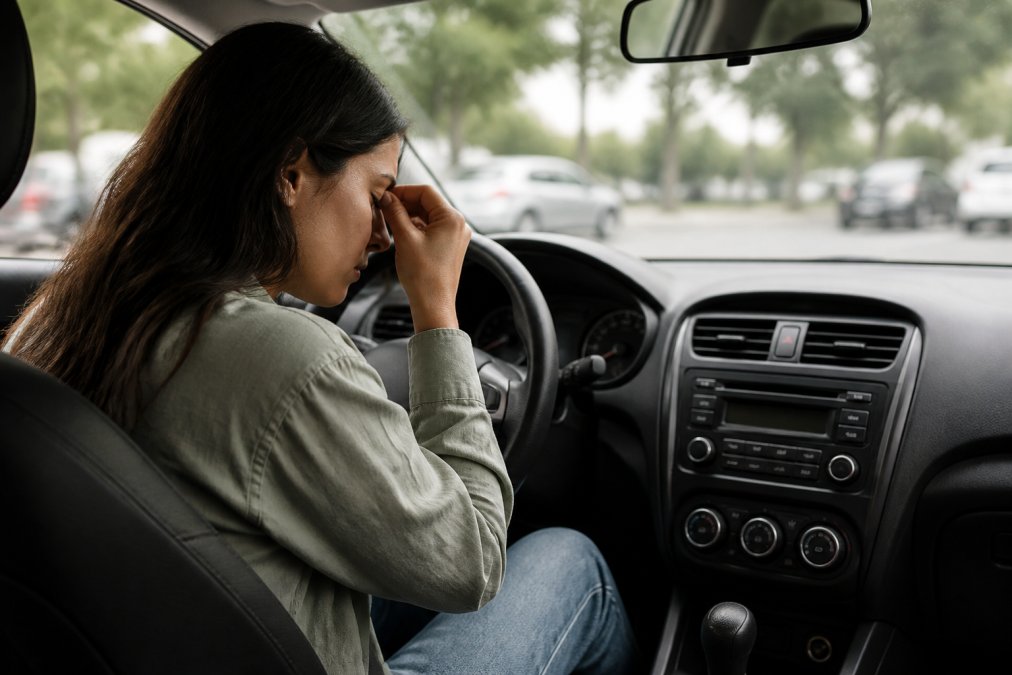
Driving anxiety shows up physically, rapid heartbeat, sweating, shallow breathing, muscle tension, nausea, or difficulty concentrating, and emotionally: fear of losing control, worry about judgment, dread, feeling trapped, or catastrophic thinking.
Some anxious drivers avoid driving or stick to familiar routes; others white-knuckle through drives, arriving exhausted. Both patterns reinforce anxiety. Recognizing your personal triggers, shaky on highways, freezing in traffic, panicking in unfamiliar areas, tells you where to focus practice.
Use Driving Anxiety Grounding Techniques to Manage Panic
Grounding techniques interrupt panic by anchoring attention to the present moment. They work because panic lives in "what if" thinking. The most effective techniques for drivers work while keeping hands on the wheel and eyes on the road.
The 5-4-3-2-1 technique: Name 5 things you see, 4 you can touch, 3 you hear, 2 you smell, 1 you taste. This shifts your brain from the anxiety center to the thinking center in 2-3 minutes.
Deep breathing is portable and effective. Box breathing: breathe in for 4 counts, hold for 4, exhale for 4, hold for 4. Repeat 5-6 times to activate your parasympathetic nervous system.
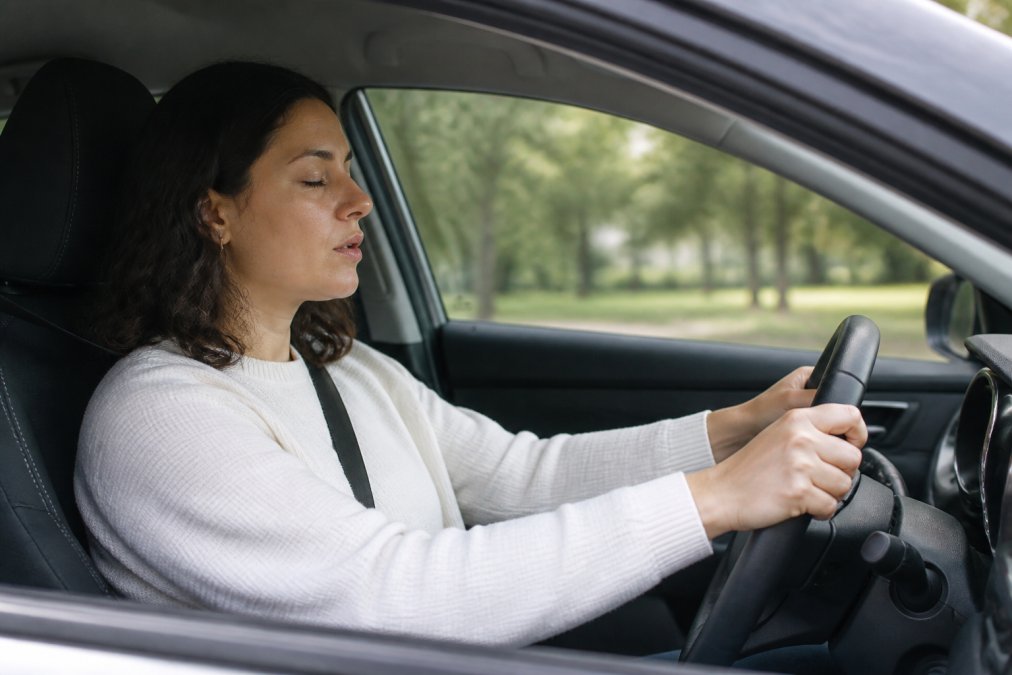
Progressive muscle relaxation reduces tension. Before driving, tense each muscle group for 5 seconds, then release, working from feet to head.
Positive self-talk rewires catastrophic thinking. Replace "I'm going to crash" with "I've driven this route before. I know what to do. I'm safe." Repetition matters.
The goal is to have a tool that brings your nervous system back to baseline when anxiety spikes, not to eliminate anxiety completely before driving.
How to Practice Driving With Anxiety: A Structured Approach
Practicing while anxious requires structure. Random drives reinforce anxiety; a structured approach removes guesswork and builds confidence through small wins.
Start with pre-drive preparation: Spend 5 minutes on grounding techniques, review your route mentally, identify one or two specific goals ("drive to the grocery store" not "be perfect"), and tell your coach where you're going.
Choose low-pressure routes first: Practice on quiet residential streets during low-traffic times. Avoid highways, heavy traffic, and unfamiliar areas until you've built baseline confidence.
Keep drives short: A 10-minute drive on a quiet road is better than a 30-minute highway drive. Short sessions keep you focused and end on a positive note.
Practice the same route multiple times: Repetition reduces anxiety. Once you've mastered a route, add one new element, a busier time, an unfamiliar turn, or longer distance.
Use a coach or support person:
Having someone in the car who stays calm and doesn't criticize makes a huge difference. Their presence signals safety to your nervous system. A coach can also help you notice progress you might otherwise miss.
Track what you accomplish: Keep a simple log of date, route, how you felt, and one thing that went well. This creates a progress record to review when anxiety spikes.
Structured practice tools like LearnerMiles can help remove the guesswork about what to practice next. Progressive lessons and a digital practice log can help keep you and your coach aligned on goals and progress.
Gradual Exposure and Desensitization Strategies
Gradual exposure is the gold standard for overcoming phobias and anxiety disorders. The principle is simple: repeated, safe exposure to the feared situation teaches your nervous system that it's not dangerous.
This is different from forcing yourself to drive on the highway and "just getting over it." That's flooding, and it often backfires, making anxiety worse. Desensitization is methodical and kind to your nervous system.
Build your exposure hierarchy:
List driving situations from least to most anxiety-provoking. For example:
- Sitting in the parked car with the engine off
- Sitting in the car with the engine running
- Driving on a quiet residential street during daylight
- Driving on a quiet street during light evening traffic
- Driving on a busier street during daylight
- Driving on the same busier street during moderate traffic
- Driving on a main road with multiple lanes
- Driving on a highway during light traffic
- Driving on a highway during moderate traffic
- Driving in heavy traffic or unfamiliar areas
Work through the hierarchy slowly:
Spend multiple sessions at each level until your anxiety drops naturally. You're not trying to eliminate anxiety completely, you're aiming for it to be manageable, not overwhelming. Once you can do level 3 with mild anxiety, move to level 4. If level 5 spikes your anxiety too high, go back to level 4 for a few more sessions.
Use virtual reality exposure when helpful:
Some drivers benefit from VR driving simulators before returning to real roads. Virtual reality therapy lets you practice in a controlled environment where you can pause, reset, and build confidence without real-world consequences. This is especially useful for drivers recovering from accidents or long breaks from driving.
Recognize that progress isn't linear:
Some days will be harder than others.
How Long to Overcome Driving Fear: Setting Realistic Expectations
Several factors affect the timeline:
Consistency matters more than intensity. Three 20-minute practice drives per week is more effective than one 2-hour drive per month. Your nervous system learns through repetition, not duration.
When to Seek Professional Help
Self-directed practice works for many people. But some situations call for professional support.
Consider talking to a mental health professional if:
- Your anxiety includes panic attacks with physical symptoms like chest pain, severe dizziness, or feeling like you're having a heart attack
- You've avoided driving for more than a few months and the thought of returning feels impossible
- Your anxiety is tied to a specific traumatic event (accident, near-miss, witnessing a crash)
- You've tried structured practice for 2-3 months and seen no improvement
- Your anxiety is affecting other areas of your life (sleep, work, relationships)
- You're experiencing depression alongside the anxiety
- You have intrusive, repetitive thoughts about crashing or dying
Types of professional support that help:
Overcome Driving Anxiety With Structured Practice and Support
Overcoming driving anxiety isn't about forcing yourself to be brave. It's about understanding how anxiety works, using tools to manage it, and practicing consistently in a structured way that builds real confidence.
Here's what actually works:
- Recognize your specific symptoms and triggers
- Use grounding techniques to interrupt panic before it escalates
- Practice on low-pressure routes with a calm support person
- Build your skills gradually, moving to more challenging situations only when you're ready
- Track your progress so you can see how far you've come
- Seek professional help if your anxiety is severe or trauma-related
Frequently Asked Questions
What are effective grounding techniques to use while driving with anxiety?
The 5-4-3-2-1 grounding method works well during moments of panic: identify 5 things you see, 4 you can touch, 3 you hear, 2 you smell, and 1 you taste. Deep breathing, such as the 4-7-8 technique (inhale for 4 counts, hold for 7, exhale for 8), activates your parasympathetic nervous system and calms your fight-or-flight response. Progressive muscle relaxation, where you tense and release muscle groups, also reduces physical tension. Practice these techniques at home first so they feel natural when driving anxiety arises on the road.
How long does it typically take to overcome driving fear?
Recovery timelines vary widely. Simple situational anxiety may improve within weeks of consistent gradual exposure practice, while post-accident trauma or diagnosed phobia may require several months of structured therapy and exposure work. Most people see noticeable progress within 4-8 weeks of regular, intentional practice combined with coping techniques. Consistency matters more than speed; short, frequent practice sessions often work better than sporadic long drives. Professional support can accelerate progress significantly.
Can I practice driving with severe anxiety, or should I wait until I feel calmer?
Waiting typically reinforces avoidance behavior and makes anxiety worse over time. Instead, practice in small, manageable doses with a supportive coach or family member present. Start in low-stress environments (empty parking lots, quiet residential streets) and gradually progress to busier roads. Use grounding techniques before and during practice to manage panic symptoms. Structured practice with clear goals, rather than avoiding the road entirely, is how most people build driving confidence and reduce anxiety.
Should I see a mental health professional for driving anxiety?
Seek professional help if your anxiety prevents you from driving, causes severe panic attacks, stems from a recent accident or trauma, or hasn't improved after weeks of self-directed practice. A therapist trained in cognitive behavioral therapy (CBT) or trauma recovery can address the root cause of your fear response. Some people benefit from virtual reality therapy or exposure therapy conducted in a clinical setting. Your primary care doctor can provide referrals to mental health professionals who specialize in anxiety disorders.
If you're struggling with driving anxiety, you're not alone. Start with structured practice, use the grounding techniques that work for you, and consider exploring guided lessons and a digital practice log at learnermiles.com to keep you and your coach aligned on progress and next steps.