
Table of Contents
- Why Driving Communication Skills Matter
- Master Verbal Cues for Driving Practice
- Use Parent-Teen Driving Practice Scripts
- How to Give Feedback to Teen Drivers
- Non-Verbal Communication on the Road
- Managing Driving Anxiety in Teens
- Build a Calm-Car Agreement with Your Learner
- Frequently Asked Questions
Last Updated: September 30, 2026
Why Driving Communication Skills Matter
Clear communication between a learner and their coach is the difference between a practice session that builds confidence and one that creates frustration. When both people understand what's happening, what comes next, and why a decision matters, the learner stays calm. They focus on the road instead of worrying about whether they're doing it right.
Most parent-teen driving conflicts start with unclear expectations. The parent thinks they've explained something. The teen hears it differently. Tension builds before the car even starts.
Driving communication skills aren't about being nice or patient alone. They're about being specific. They're about knowing what to say, when to say it, and how to say it so the learner actually absorbs the information instead of getting defensive. This matters because anxiety and confusion are the two biggest obstacles to confident driving.
The learners who improve fastest aren't the most naturally talented drivers. They're the ones whose coaches communicate clearly before, during, and after the drive.
Master Verbal Cues for Driving Practice
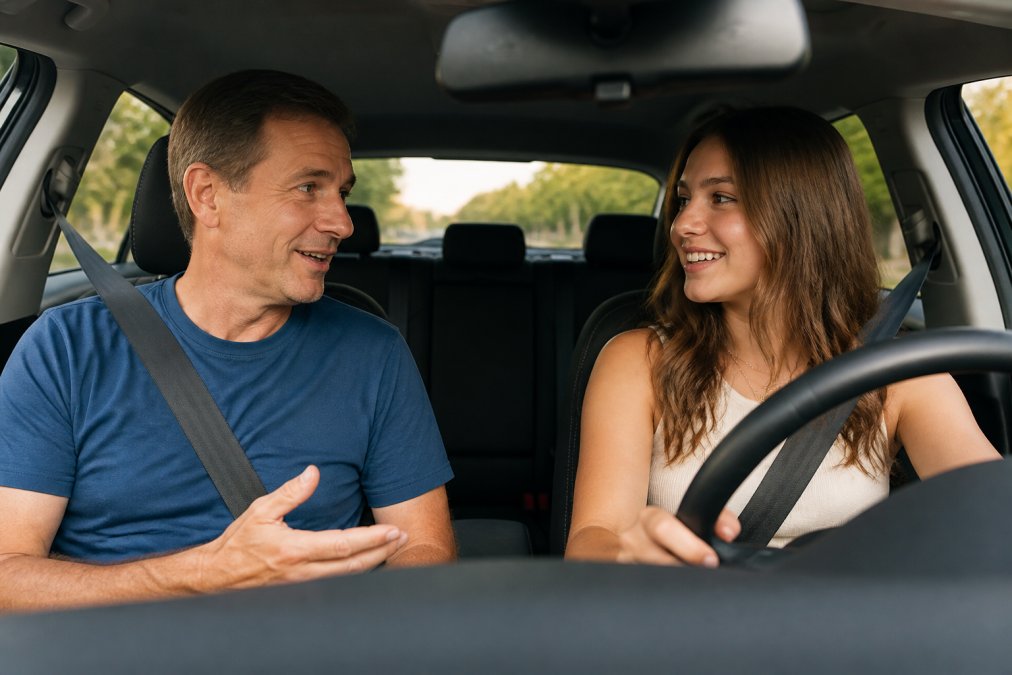
Verbal communication in the car must be simple and direct. Short, clear instructions work better than long explanations that distract a focused learner.
Use these principles for every instruction you give:
- Say one thing at a time. Not "Turn left at the light and check your mirror and slow down." Just "Turn left at the light."
- Use specific landmarks. Not "Turn soon." Say "Turn left at the red mailbox."
- Give instructions before the turn. Not during it. A learner needs time to process and execute.
- Confirm understanding. Ask "Do you see the mailbox?" instead of assuming they know what you mean.
The best verbal cues sound natural, not robotic. You're not reading a script. You're speaking like someone who knows the road and trusts the learner to follow through.
Resist over-explaining. Save detailed feedback for after the car stops, not during the drive.
Use Parent-Teen Driving Practice Scripts
Scripts provide a framework so you don't improvise under pressure. When things get tense, a script keeps you on track.
Before-Drive Scripts
Start every practice session the same way to reduce anxiety. Cover: today's specific skill, how you'll give directions, that they can ask to pull over, and that you'll debrief after. This 60-second routine sets clear expectations.
In-Car Communication Scripts
Keep it brief. One sentence per instruction.
- "Left turn ahead at the gas station."
- "Check your mirror before you change lanes."
- "Slow down to 25 miles per hour."
- "You're doing well. Stay focused."
If the learner makes a mistake, don't correct it immediately unless safety is at risk. Let them finish the maneuver. Then address it after you've parked.
Post-Drive Debrief Scripts
This is where real learning happens. Use a simple structure:
- "What do you think went well today?"
- "What felt challenging?"
- "Here's what I noticed: [one or two specific observations]."
- "Next time, let's focus on [one thing to improve]."
Ask the learner first. Let them reflect on their own performance. This builds self-awareness and reduces defensiveness. When they identify a mistake themselves, they're more likely to fix it next time.
How to Give Feedback to Teen Drivers
Most people give feedback the way they received it, vague, emotional, or focused on what went wrong.
Driving communication skills improve when feedback is specific, timely, and focused on one behavior at a time.
The Constructive Feedback Formula
Use this structure every time:
- Observe: "I noticed you didn't signal before turning left."
- Explain why it matters: "Signaling tells other drivers your intention. It keeps everyone safer."
- Show the better way: "Next time, signal at least 3 seconds before you turn."
- Reinforce effort: "You handled the turn smoothly. The signal was the only thing missing."
This formula works because it's not an attack. You're describing what happened, explaining the reason, and showing what to do differently. The learner hears feedback, not criticism.
Timing and Tone Matter
Never give feedback while driving. The learner's attention is divided. They can't process what you're saying and drive safely at the same time.
Wait until you've parked. Then give feedback in a calm voice. If you're frustrated, take a breath first. A frustrated tone makes the learner defensive, no matter how fair your words are.
Keep feedback sessions short. Two or three observations per session is plenty. More than that, and the learner stops listening.
Non-Verbal Communication on the Road
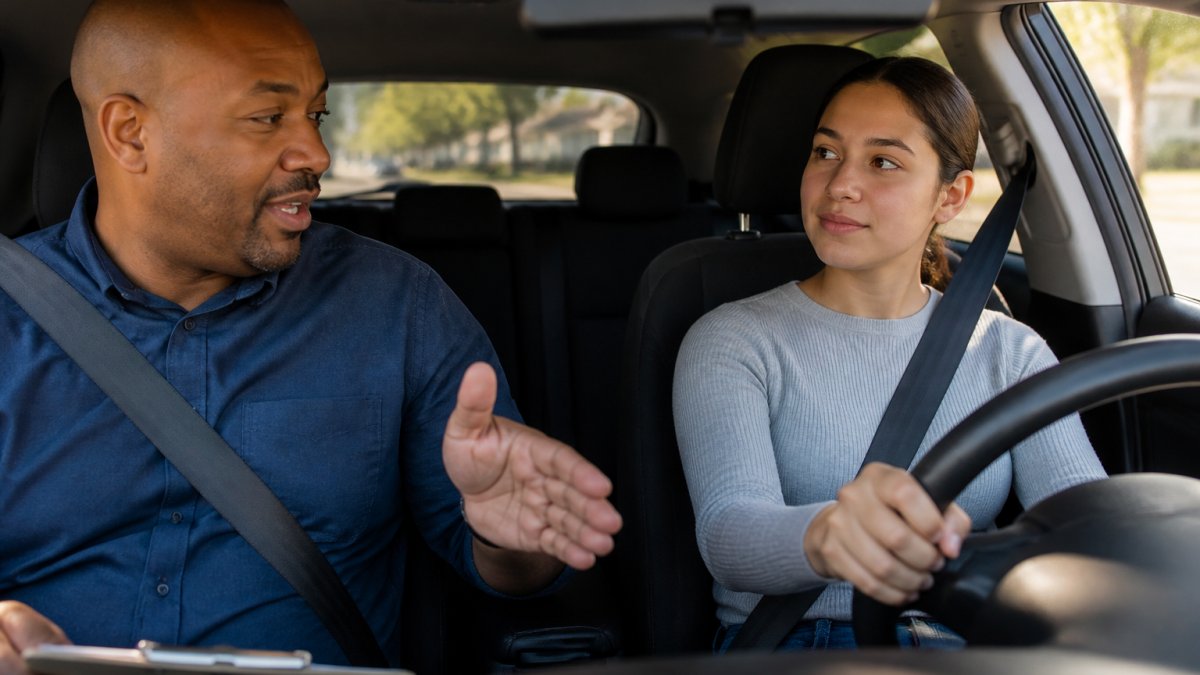
Body language communicates more than words. A coach saying "you're doing great" while gripping the door handle sends a contradictory message: I don't actually trust you. This disconnect creates anxiety and undermines confidence.
Why Non-Verbal Signals Matter More Than You Think
Your non-verbal cues become a real-time feedback loop. If you're tense, they interpret it as danger. If you're calm, they interpret it as safety. When a learner hesitates before a turn or merge, your response in the next 2-3 seconds shapes whether they feel supported or judged.
Specific Non-Verbal Behaviors and Their Impact
Posture and positioning: Sit back with shoulders relaxed. Keep hands visible and resting, not gripping. Avoid bracing your foot or pressing an imaginary brake, learners feel this tension and interpret it as fear.
Facial expressions: Maintain a neutral to slightly positive expression. Make eye contact during conversations after you've parked, not while driving. Nod or smile when the learner executes a maneuver correctly.
Breathing and energy: Breathe normally. Holding your breath signals anxiety. Match the learner's pace with calm, patient energy.
The Mismatch Problem: When Words and Body Language Conflict
Saying "Take your time" while checking your watch sends a contradictory message. Saying "You're doing well" while your jaw is clenched makes the learner doubt the compliment. Do a quick self-check before each session: if you're frustrated or anxious, reschedule rather than broadcast tension.
Using Non-Verbal Communication to Reinforce Learning
Use consistent, intentional non-verbal signals: nod after a smooth maneuver, lean slightly forward during challenging ones, maintain relaxed silence after mistakes, and mirror calm breathing to help regulate the learner's nervous system.
The Role of Eye Contact in Feedback
Sit at an angle with gentle eye contact to show you're talking with the learner, not at them. Looking away signals the feedback isn't important and makes the learner defensive.
Managing Driving Anxiety in Teens
Anxiety is the biggest barrier to confident driving. An anxious learner can't focus on the road; they're focused on their fear. Their processing slows, reaction time increases, and they second-guess decisions, often making the mistakes they fear most.
Have real-time de-escalation scripts ready.
Recognize Anxiety Signals Before They Escalate
Physical signals: Tight grip on the wheel, stiff posture, rapid or shallow breathing, fidgeting, sweating, or foot hovering over the brake.
Real-Time De-Escalation Scripts
When you notice anxiety rising, use these specific scripts. The key is to acknowledge the feeling, ground the learner in the present moment, and give them a concrete, manageable task.
Script 1: Acknowledging and Normalizing
Script 2: Grounding in the Present
Script 3: Reframing the Nervous System Response
Script 4: Reducing Scope When Overwhelmed
Script 5: Validating Effort Over Outcome
When to Pause and Pull Over
Not all anxiety can be managed in the moment. Pushing through panic builds trauma, not confidence. Know the signs that it's time to stop:
- The learner is asking to pull over repeatedly
- Their breathing is very rapid or they're hyperventilating
- They're crying or showing signs of a panic attack
- They're no longer responding to your scripts or reassurance
- You feel unsafe because their anxiety is affecting their driving
Building Anxiety Resilience Over Time
Anxiety management isn't just about scripts. It's about gradually exposing the learner to challenging situations in a controlled way, so their nervous system learns that they can handle it.
Build a Calm-Car Agreement with Your Learner
A calm-car agreement sets expectations and removes guesswork. Include: what you'll practice, how you'll communicate, what happens if it gets stressful, how you'll give feedback, and what success looks like. Review and adjust before each session.
Frequently Asked Questions
How can parents communicate better with teen drivers?
Start with clear, jargon-free instructions before the drive begins. Use the Calm-Car Agreement to set expectations about what will happen during practice. During driving, offer verbal cues that are specific and actionable, instead of 'you're too fast,' say 'ease off the accelerator, we want to stay at 25 mph here.' After the drive, use the constructive feedback formula: observe what happened, explain why it matters for safety, and suggest one improvement for next time. Consistency and empathy reduce defensiveness and build trust.
What are some examples of effective verbal cues for driving practice?
Effective verbal cues are short, clear, and action-oriented. Examples include: 'Check your mirror before changing lanes,' 'Ease off the gas as you approach the intersection,' 'Your turn signal, activate it now,' and 'That was a smooth stop.' Avoid vague language like 'be more careful' or 'pay attention.' Instead, name the specific action and why it matters. Praise specific behaviors: 'You checked both mirrors before turning, that's exactly right.' This kind of articulation helps learners understand what they're doing well and what to adjust.
How do I help my teen stay calm while learning to drive?
Recognize that anxiety is normal and validate it. Before practice, establish a routine: review the route, set one or two learning goals, and remind your teen that mistakes are part of learning. During the drive, use a calm tone and avoid sudden corrections that startle them. If stress rises, pause the session, pull over safely and take a breath together. After practice, reflect on what went well, not just what didn't. Over time, this structured, supportive approach builds confidence and reduces anxiety. Tools like a digital practice log help track progress, which itself is calming.
Why is clear communication essential for road safety?
Unclear instructions create confusion, and confusion behind the wheel can lead to unsafe decisions. When a coach or parent communicates clearly, using specific, concise language and explaining the 'why' behind each instruction, the learner understands expectations and can focus on the road. Non-verbal cues like calm body language and steady eye contact also signal safety and professionalism. Clear communication reduces guesswork, builds situational awareness, and helps learners develop the interpersonal skills they need to stay safe and confident on the road.