Last Updated: November 12, 2026
Quick Summary
To choose driver's ed in Appleton, first confirm the requirements for your age through Wisconsin Department of Transportation driver licensing pages. Then compare classroom, online and hybrid formats, and request an itemized written quote from each provider.
- Confirm current minimum ages, permit rules and required hours with your local licensing authority.
- Ask every provider which program type they offer and request proof in writing.
- Compare classroom, online and hybrid formats based on how the learner studies best.
- Compare itemized quotes including behind-the-wheel hours, vehicle, certificate fees and cancellation terms.
- Ask Appleton providers about credentials, scheduling and refund policies before enrolling.
Table of Contents
- Start With Wisconsin Driver Education Requirements
- Compare Classroom, Online and Hybrid Driver's Ed Formats
- Check What Local Programs Include and What They Cost
- Ask Appleton Schools These Questions Before Enrolling
- Plan Parent-Supervised Teen Driving Practice Between Lessons
- Track Progress With a Teen Driving Practice Log
- Book Your Next Step and Prepare for the Road Test
- Frequently Asked Questions
Start With Wisconsin Driver Education Requirements
Choosing a driver's ed program starts with knowing what your state actually requires, because rules for teen drivers differ from the rules for adults and for parent-supervised practice. LearnerMiles is an independent educational guide, not a state-approved course, so it cannot replace a required program. Check the official rules through the Wisconsin Department of Transportation driver licensing pages before you enroll.
Requirements change, so confirm current minimum ages, permit rules and required hours with your local licensing authority rather than relying on a blog post, including this one. Parent-supervised practice and a formally authorized parent-taught program are also different things. The first is driving time you supervise yourself. The second is a program the state has recognized. Keep the two separate when you compare options.
Ask every provider which of these they are, and ask for proof in writing.
Compare Classroom, Online and Hybrid Driver's Ed Formats
Driver's ed comes in several common formats: in-person classroom, fully online, and a hybrid of the two. Each can cover the classroom portion, but behind-the-wheel requirements vary by jurisdiction, so check with your local licensing authority.
- Classroom: Scheduled sessions with an instructor, which suits learners who do better with live questions.
- Online: Self-paced modules that fit around school and work, though they demand self-discipline.
- Hybrid: Online coursework plus in-person sessions, a common middle ground.
Read each program's description to see which parts are online and which must happen in person. Online workbooks and logged practice hours support learning, but they do not prove readiness or replace required education. For a broader view of formats, see our article on alternatives to traditional classroom driver's ed, and our guide to online drivers ed for what the online experience involves. Many families also use the LearnerMiles guided practice membership alongside a required program to structure the practice time between lessons.
The three common formats differ mainly in how the classroom portion is delivered, so compare them on these points.
| Format | Best for | Key difference |
|---|---|---|
| Classroom | Learners who do better with live questions | Scheduled sessions with an instructor |
| Online | Learners fitting study around school or work | Self-paced modules that demand self-discipline |
| Hybrid | Learners wanting a middle ground | Online coursework plus in-person sessions |
Check What Local Programs Include and What They Cost
Advertised package prices are hard to compare because programs bundle different things. Build your own comparison sheet with the same line items for every provider, then fill in the numbers from each provider's current written quote.
Line items to capture for each program:
- Classroom hours included, and whether they are in person, online, or hybrid
- Behind-the-wheel hours included, and whether they are one-on-one or shared with another student
- Whether the training vehicle is provided for lessons and for the road test
- Whether the state-required certificate or completion paperwork is included or billed separately
- Road test scheduling help, and whether a vehicle is supplied on test day
- Pickup and drop-off area, and any charge for traveling outside it
- Cancellation and no-show rules, and how much notice avoids a fee
- Refund policy if the learner moves, changes programs, or stops partway
- Any fuel, insurance, or administrative surcharges added at enrollment
Why the headline price misleads. Packages can include different amounts of driving time for the same total. Compare the included behind-the-wheel hours alongside the package price rather than the sticker price alone.
Bundle versus à la carte. Some providers sell classroom and behind-the-wheel separately; others only sell a full package. If a learner has already completed classroom work elsewhere, ask whether a behind-the-wheel-only option exists and what it includes. Conversely, if a package bundles more classroom hours than the state requires, confirm you are not paying for instruction the learner does not need.
Scheduling affects real cost. Sessions booked far in advance can delay a permit or road test, which has its own cost in time. Ask how far out lessons are booked, whether evenings and weekends are available, and how rescheduling works before you compare totals.
Get it in writing. Request an itemized quote, not a verbal range. LearnerMiles does not set local program prices, so the figures must come from each provider directly. Record the total cost including every add-on, the included hours, and the cancellation terms side by side, then compare like with like.
Watch out: a low headline price that excludes extras such as the training vehicle, certificate fees, or road test day can cost more than a higher all-inclusive package once those extras are added.
Ask Appleton Schools These Questions Before Enrolling
A question list only helps if you know what a good answer sounds like. Families often call several providers but may not know how to weigh the replies. Use the questions below with a simple scoring method: mark each answer as clear, vague, or refused, and treat a pattern of vague or refused answers as a warning sign regardless of price.
Program recognition and eligibility
- Is the program recognized for the learner's age under Wisconsin requirements, and can you show that in writing?
- Which parts are classroom, which are behind-the-wheel, and which, if any, are parent-taught?
- What completion paperwork does the learner receive, and what does the state require alongside it?
A strong answer names the specific requirement and points to official documentation. A weak answer says "we're approved" without specifics. Confirm the requirement yourself through the Wisconsin Department of Transportation driver licensing pages, because recognition claims should match what the state actually lists.
Instructor qualifications
- Are instructors licensed or certified, and by whom?
- How long has the instructor been teaching, and do they specialize in teen, adult, or anxious learners?
- Can we request a specific instructor or switch if the fit is poor?
Ask for credentials, not adjectives. "Experienced" means little; a licensing body and a tenure do.
Behind-the-wheel logistics
- How many hours are included, and is instruction one-on-one or shared?
- Is the training vehicle provided, and is it dual-control?
- Where does pickup happen, and is there a charge outside that area?
- How far out are sessions booked, and are evenings and weekends available?
Money and cancellation terms
- What is the total cost including every fee, and what is billed separately?
- What is the refund and cancellation policy, and how much notice avoids a charge?
- What happens if the learner needs to pause or change programs?
Accessibility and accommodations
- Are classroom or online materials accessible for learners with disabilities?
- Can lessons accommodate a learner who needs extra time, a different communication style, or vehicle adaptations?
- Is instruction available in the learner's preferred language?
Independent quality signals
Provider claims are marketing. Look for evidence outside the brochure: ask whether you can speak with a recent family, check whether the program appears on your state's official list of recognized providers, read reviews for patterns rather than single complaints, and ask how any first-attempt pass rate is measured. Treat any first-attempt figure as a provider claim unless it is independently reported.
A quick scoring method. For each provider, tally how many questions got a clear written answer. A provider that answers most of them specifically, and puts the terms in the enrollment agreement, is easier to trust than one that answers warmly but vaguely. Keep the written answers with your comparison sheet so you can revisit them if terms change.
Watch out: a provider that will not put recognition, instructor credentials, or cancellation terms in writing is asking you to rely on a verbal promise that is hard to enforce later.
Plan Parent-Supervised Teen Driving Practice Between Lessons
Lessons work best when practice happens between them. Plan short, regular sessions in low-traffic areas, then move to busier roads as skills build. Agree on the goal for each session before you start, such as parking, merging or night driving.
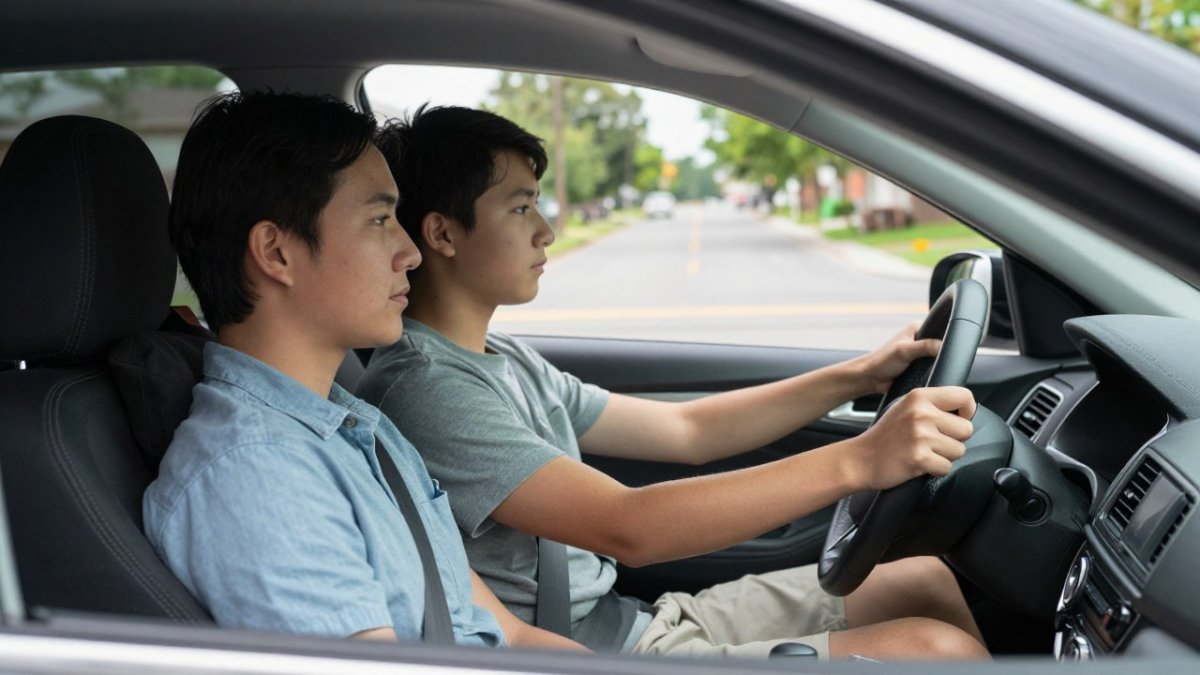
Keep the atmosphere calm. Many teens feel tense around a parent in the passenger seat, so set expectations first and talk through what you will and will not do. A clear agreement about how feedback is given can reduce arguments. Teen driving guidance from the National Highway Traffic Safety Administration offers helpful background on supervised practice.
Between sessions, a structured guide for parents helps: our structured driving practice for parents guide covers how to plan these sessions, and how to teach a nervous teen driver walks through handling anxiety step by step. The LearnerMiles guided practice membership offers a ready-made sequence of lessons if you want the planning done for you.
Track Progress With a Teen Driving Practice Log
A written practice log shows what the learner has worked on and what still needs attention. Record the date, the duration, the road type, the skill practiced, and one thing that went well and one thing to improve. Keep the entries short so they are easy to maintain.
A log is a useful coaching tool, not proof of readiness. Use it to spot patterns, such as a learner who struggles with left turns in heavy traffic, and to decide what to practice next.
Book Your Next Step and Prepare for the Road Test
Once you have chosen a program and planned your practice, book the next step: the first lesson, the knowledge test, or the road test, depending on where the learner stands. Confirm what documents you need to bring, and ask the provider how the road test is scheduled. Printable checklists from the LearnerMiles books and printables can help you track practice goals.
Before the test, practice the exact maneuvers the examiner will check, and drive the route you will be tested on if possible. Keep the final sessions calm and focused rather than rushed. Learners who arrive rested and familiar with the car usually perform better.
Guided lessons and the digital practice log at LearnerMiles can help you plan the work between lessons. Explore them at learnermiles.com.
Frequently Asked Questions
How much does driver's ed cost in Wisconsin?
Costs vary by provider, course format and whether behind-the-wheel lessons are bundled into a package. Because prices change and differ between Appleton-area programs, the most reliable approach is to request a written quote that lists exactly what is included, such as classroom hours, online access, and the number of in-car sessions. Compare the totals on the same basis, and confirm any fees for rescheduling or road-test vehicle use before you pay. Current requirements for which courses are needed should be confirmed with your local licensing authority.
Does online driver's ed replace behind-the-wheel instruction?
Not necessarily. Whether an online course satisfies a requirement depends on Wisconsin rules and on the program's approval status, so check with your local licensing authority before assuming any course replaces required instruction. Online coursework covers rules and knowledge, but it does not give a teen supervised time behind the wheel. Parent-supervised practice and any professional lessons remain separate parts of learning to drive, and logged practice hours do not by themselves prove readiness for a road test.
How can parents help teens practice driving between lessons?
Start in low-traffic areas, such as an empty parking lot, and move to quiet residential streets as skills develop. Agree on expectations before the drive, keep instructions short and calm, and stop the practice if either of you cannot stay focused. Use a short pre-drive check covering mirrors, seat position and signals. Keep a simple record of what was practiced, and talk through each session afterward. Rules on required practice hours and minimum ages vary, so confirm them with your local licensing authority.
