
Last Updated: October 23, 2026
Quick Summary
Essential driving skills for new drivers form the foundation of safe, independent driving by building the muscle memory and decision-making habits that keep you safe in real traffic. These fundamentals, vehicle control, spatial awareness, smooth pedal work, mirror awareness, road scanning, and speed management, develop through structured practice in progressively challenging environments.
- Practice one or two focus skills per session, such as smooth braking or mirror checks, rather than aimless driving.
- Use the three-part mirror check before every lane change, turn, or merge: rearview mirror, side mirror, then blind spot.
- Scan the road in three zones: just ahead, mid-range traffic, and far distance where hazards first appear.
- Follow the three-second rule to maintain safe distance: count the time between when the vehicle ahead passes a fixed point and when you reach it.
- Debrief after each drive with specific questions about what was hardest, what improved, and what to practice next.
Table of Contents
- Why Essential Driving Skills Matter for New Drivers
- 2. Steering, Lane Position, and Spatial Awareness
- 3. Smooth Acceleration and Braking
- 4. Mirror Checks and Blind Spot Awareness
- Driving Skills for Beginners: Scanning, Anticipation, and Hazard Awareness
- 5. Turning, Lane Changes, and Merging
- 6. Speed Control and Following Distance
- Putting It All Together: A Practice Plan
- Frequently Asked Questions
Why Essential Driving Skills Matter for New Drivers
Confidence and knowing what to practice next separate anxious learners from drivers who feel ready.
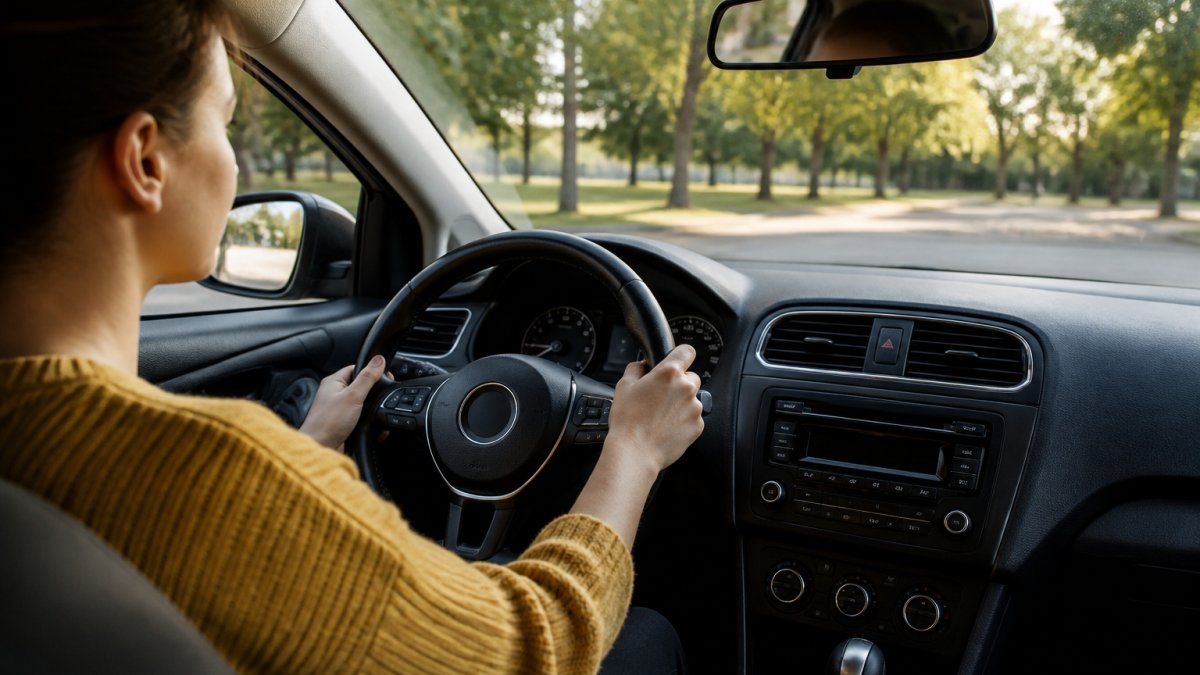
Essential driving skills for new drivers form the foundation of safe, independent driving. They aren't just about passing a road test; they build the muscle memory and decision-making habits that keep you safe in real traffic.
These skills reflect what instructors prioritize and road tests evaluate, but more importantly they address the gaps most learners struggle with: smooth steering, consistent braking, spatial awareness, and reading the road ahead.
(/blog/driving-practice-drills-new-drivers) brake too hard or too softly because they lack consistent pedal feel. Practice starting and stopping in an empty parking lot until the motion becomes automatic, aiming for smooth, predictable braking.2. Steering, Lane Position, and Spatial Awareness
Steering is not just about turning the wheel; it's about maintaining lane position and understanding how much space your vehicle occupies. New drivers often overcorrect, jerking the wheel when a gentle adjustment would work, or underestimate how wide their vehicle is.
A practical milestone: drive a straight line down a quiet street without drifting left or right. Then practice gentle lane changes on an empty road, signaling and checking mirrors before moving.
3. Smooth Acceleration and Braking
Acceleration and braking are the two pedal skills that define driving comfort. Smooth means gradual, not jerky or hesitant. Many new drivers press the accelerator too hard, causing the vehicle to lurch, or apply it in fits and starts.
Practice in an empty parking lot or quiet street. Accelerate slowly to 10 mph, then brake smoothly to a stop. Repeat at different speeds.
4. Mirror Checks and Blind Spot Awareness
Every time you change lanes, turn, or merge, you need to know what's around you. Mirrors show what's behind and to the sides, but blind spots at the rear quarter panels go uncovered. The process is simple: check the rearview mirror, glance at the side mirror on the direction you're turning, then turn your head to check the blind spot.
Practice this habit on every drive, even when you're not changing lanes, until mirror checks become automatic.
Driving Skills for Beginners: Scanning, Anticipation, and Hazard Awareness
Scanning the road means looking ahead, not just at the pavement in front of you. New drivers often focus too close to the vehicle, missing hazards further down the road.
Anticipation means predicting what might happen next. Brake lights ahead mean traffic is slowing; a parked car with its engine running might pull out; children playing near a street might run into it.
A simple hazard-perception routine
Hazard perception is a learnable skill, not a personality trait. A repeatable routine turns scattered observations into decisions:
- Scan, sweep your eyes across the road, mirrors, and edges of the roadway on a steady rhythm rather than staring at one point.
- Identify, name the potential hazard out loud or silently: a cyclist near the curb, a delivery truck blocking a lane, a car edging out of a driveway.
- Predict, ask what that hazard might do next. The cyclist may swerve around a pothole; the truck may hide a pedestrian; the car may pull out without signaling.
- Decide, choose a response in advance: ease off the accelerator, increase following distance, change lane position, or prepare to brake.
- Act, make the adjustment smoothly and early, while you still have space and time.
This sequence is the difference between reacting to a surprise and managing a situation you already saw developing. Coaches can walk a learner through it verbally until the learner does it automatically.
Scenario practice for real roads
Hazard perception improves fastest when learners rehearse realistic situations, not just quiet conditions. During supervised practice, talk through scenarios such as:
- A ball rolling into the street, anticipate a child following it.
- A row of parked cars with brake lights on, anticipate a door opening or a vehicle pulling out.
- A large truck ahead, anticipate limited visibility around it and avoid lingering in its blind spots.
Start on quiet, familiar routes, then introduce busier streets as confidence grows. Hazard awareness is not about driving fearfully; it is about seeing clearly enough to choose the safest option early.
Try the Free First Drive Kit →
5. Turning, Lane Changes, and Merging
Turning requires coordination: signal, check mirrors and blind spot, slow to an appropriate speed, turn the wheel smoothly, and accelerate out of the turn. Signaling alerts other drivers to your intention, checking mirrors and blind spot confirms the path is clear, and slowing before the turn prevents skidding on tight corners.
A practical milestone: execute a lane change or merge without hesitation, checking all mirrors and blind spots, and maintaining smooth steering throughout.
6. Speed Control and Following Distance
Speed control means adjusting your speed for road conditions, traffic, and your own skill level. Speed limits are maximums, not targets; wet roads, heavy traffic, and unfamiliar routes all justify slower speeds. Following distance is the space between your vehicle and the one ahead. A common rule is the three-second rule: pick a fixed point the vehicle ahead passes, then count "one-one-thousand, two-one-thousand, three-one-thousand." If you pass the point before finishing the count, you're too close.
Putting It All Together: A Practice Plan
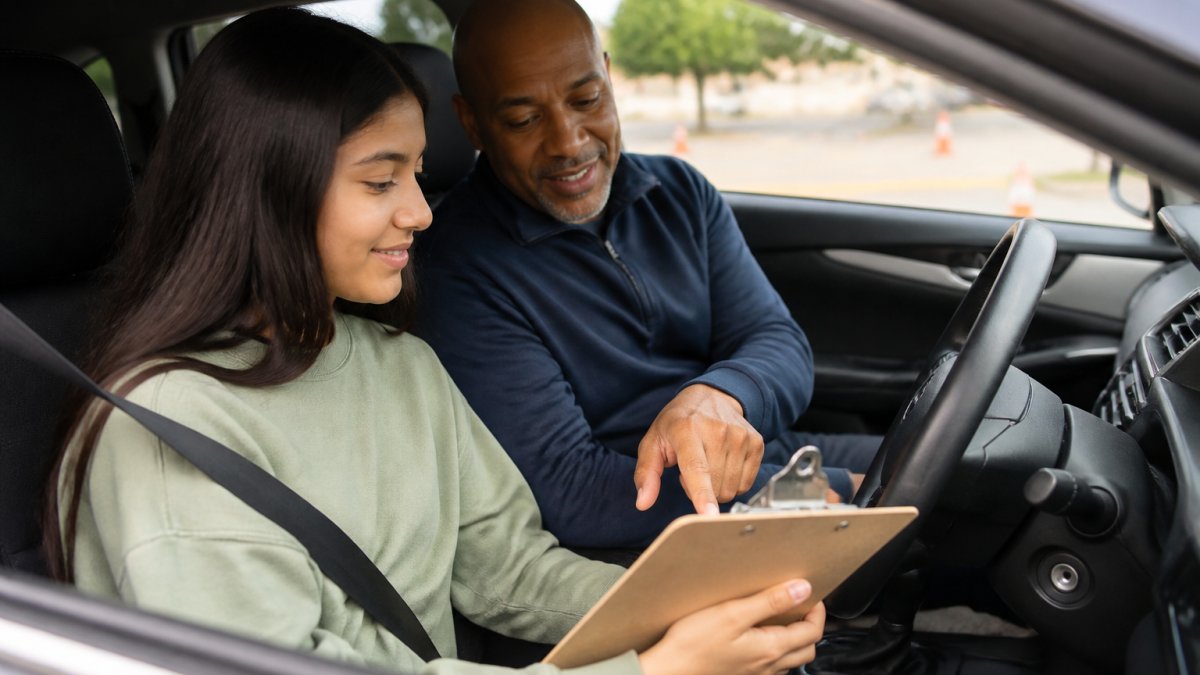
Structured practice accelerates skill development far more than random driving. A coach, a parent, guardian, or professional instructor, should guide the learner through progressively harder scenarios: empty parking lots and quiet residential streets first, then busier streets with traffic lights and pedestrians, then highway, night, and adverse-weather driving. Move on when the learner can perform a skill smoothly and consistently, not simply because a set number of sessions has passed.
Build a repeatable practice rhythm
A workable pattern for most families looks like this:
- Plan before you drive. Pick one or two focus skills for the session, for example, smooth braking and mirror checks, and tell the learner in advance.
- Warm up in low-pressure conditions. Begin on a quiet street or lot to let the learner settle in before adding traffic.
- Practice the focus skill deliberately. Repeat it several times in a row rather than hoping it comes up naturally.
Debrief questions that actually help
Feedback is where most supervised practice falls short. Instead of "good job" or "be more careful," use specific questions:
- What was the hardest moment in today's drive, and what made it hard?
- Which skill felt smoother than last time?
- What would you do differently at that intersection or lane change?
Let the learner answer first. A coach who listens before correcting builds the communication habit that matters when the learner eventually drives alone. Keep the tone factual and calm; the goal is shared understanding, not a performance review.
Track progress so you know what to practice next
Memory fades between sessions, and it is easy to repeat the same easy drives while avoiding the skills that need work.
LearnerMiles guided practice membership provides a framework for this progression through guided lessons and a digital practice log.
Each practice session should have a focus: "Today we're working on smooth braking" or "Let's practice lane changes on this busier street." This targeted approach builds confidence faster than aimless driving.
The goal of mastering essential driving skills for new drivers isn't just to pass a road test.
Ready to put a plan behind the practice? Start with the free First Drive Kit at https://learnermiles.com/?page=firstdrive#first-drive-kit, and explore guided lessons and the digital practice log at learnermiles.com.
Frequently Asked Questions
What are the most important essential driving skills for new drivers to master first?
Start with vehicle-control fundamentals: understanding where all controls are, how to start and stop safely, and how to steer smoothly. Then build to mirror checks, speed control, and hazard awareness. Most new drivers benefit from practicing these in quiet environments before moving to busier roads. A structured progression, like the 10-stage approach in guided practice programs, helps you know exactly what to focus on at each stage, reducing overwhelm and building real confidence.
How can I improve my driving skills as a beginner without feeling overwhelmed?
Break practice into small, specific sessions focused on one or two skills at a time. For example, spend one session on smooth braking, the next on mirror checks and lane position. Practice in calm environments first, quiet residential streets or empty parking lots, before tackling busier roads. Keep a practice log to track what you've worked on and what feels easier. Having clear, written expectations between you and your parent or coach removes guesswork and makes each session more focused and less stressful.
What should be on my road test skills checklist before I take the exam?
Your checklist should include: starting and stopping the car smoothly, steering and maintaining lane position, accelerating and braking without jerking, checking mirrors and blind spots regularly, scanning ahead for hazards, maintaining safe following distance, turning and merging with proper signaling, obeying traffic signs and signals, managing speed for conditions, and staying calm under pressure. Practice each skill multiple times in different conditions, daytime, evening, light traffic, busier roads, so you feel ready for whatever the examiner presents.
How do I practice driving with a parent in a way that actually reduces stress instead of creating conflict?
Set clear expectations before each practice session: what you'll practice, where you'll go, and how feedback will be given. Agree on a calm-car agreement that outlines respectful communication from both sides, the learner stays focused and receptive, and the parent avoids yelling or sudden comments. Use a practice log to track progress so you can see improvement over time, which builds confidence. Start with short sessions in low-pressure environments, and celebrate small wins. If tension rises, it's okay to pause and try again another day.
How long does it typically take a new driver to feel confident behind the wheel?
Confidence builds gradually and varies by person. Most new drivers feel noticeably more comfortable after 10-20 hours of focused practice on core skills in varied conditions. However, true confidence, the ability to handle unexpected situations and stay calm under pressure, often takes longer and continues to grow after you pass your road test. Structured practice with clear milestones helps you measure progress and recognize how far you've come, which itself builds confidence even when you still feel nervous.
Learning to drive is challenging, and knowing what to practice next shouldn't add to that stress. LearnerMiles guides you through 10 progressive lessons with a structured practice log that tracks your progress and helps your coach give feedback that actually sticks. Explore guided lessons and the digital practice log at learnermiles.com, or check out the free First Drive Kit to get started today.
