
Last Updated: November 1, 2026
Quick Summary
A driving rehabilitation specialist assesses whether a person can drive safely and recommends ways to make driving possible, combining medical and driver-training expertise. Evaluations are usually billed as separate components, so the total depends on which parts you receive.
- Evaluations are often billed as separate parts, so compare quotes on the same itemized components.
- The on-road evaluation is usually the largest single cost because it uses evaluator and vehicle time.
- Ask whether the quote includes the road portion and the written report before comparing prices.
- Insurance may cover an evaluation when a physician orders it for a medical reason, so confirm coverage in writing first.
- A specialist does not license drivers; your local licensing authority makes the official decision.
Table of Contents
- What a Driving Rehabilitation Specialist Does
- Who May Benefit From a Driving Rehabilitation Evaluation
- Inside a Driving Rehabilitation Evaluation, Step by Step
- Driver Evaluation Cost: What Affects the Price
- Insurance Coverage for Driver Rehabilitation
- Driving School vs. Driver Rehabilitation: Which Do You Need?
- Finding a Qualified Specialist and Planning Your Next Step
- Frequently Asked Questions
What a Driving Rehabilitation Specialist Does
A driving rehabilitation specialist is a professional who assesses whether a person can drive safely and recommends ways to make driving possible. Readers who feel nervous behind the wheel can also review self-directed steps to reduce driving anxiety before or alongside a professional evaluation. Their work sits between medicine and driver training.
Most specialists look at the whole driver. They review vision, reaction time, attention, memory, and physical strength or range of motion. They then test how those abilities show up behind the wheel.
Their role usually includes:
- Reviewing medical history and current health conditions
- Testing vision, perception, and cognitive skills in a clinic
- Observing driving in a vehicle, sometimes with a specially equipped car
- Recommending adaptive equipment or vehicle modifications
- Suggesting training, restrictions, or next steps
A specialist does not license drivers. Your local licensing authority still decides whether a person may hold or keep a license.
Who May Benefit From a Driving Rehabilitation Evaluation
An evaluation can help when a health change, injury, or aging raises questions about driving. It is not only for older adults. Anyone whose ability to drive is in doubt may benefit.
Common reasons people seek an evaluation include:
- A recent stroke, brain injury, or neurological diagnosis
- Vision changes or eye conditions
- Limited movement in the neck, arms, or legs after an injury or surgery
- Medication that may affect alertness
- Noticeable changes in driving, such as near-misses or getting lost on familiar routes
Some older drivers and people returning to driving after a long break also find a formal review useful. A good evaluation can offer clear answers instead of guesswork, for the driver and their family.
Inside a Driving Rehabilitation Evaluation, Step by Step
Evaluations follow a general pattern, though each provider runs them differently.

- Referral and intake. A doctor or family member often starts the process. The specialist collects health history and goals.
- Clinical assessment. The clinic tests vision, motor skills, and thinking abilities. These off-road results help the specialist understand what might affect driving.
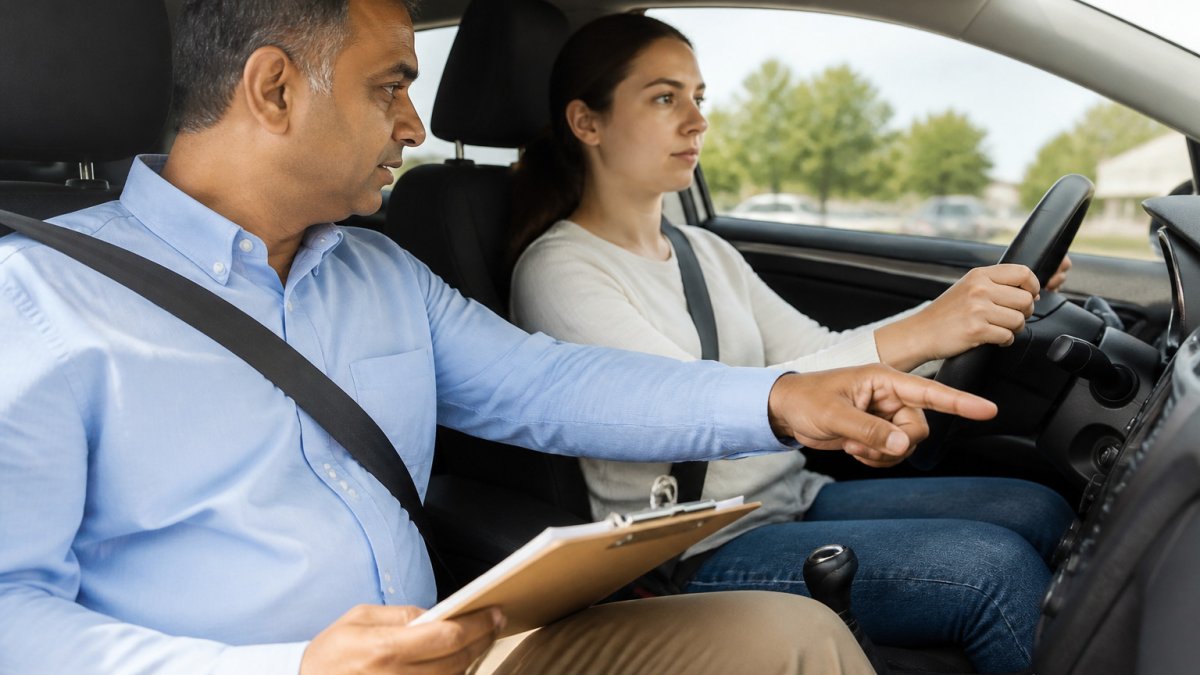
- On-road evaluation. A trained evaluator rides along or uses a specially equipped vehicle to observe real traffic. This is often the most revealing part.
- Results and recommendations. The specialist explains findings and may suggest training, vehicle changes, or restrictions.
Watch out: an evaluation result describes current performance on the test day. It does not promise how someone will drive in every situation later.
Driver Evaluation Cost: What Affects the Price
The more useful answer is to understand why it varies, so you can predict which end of the range a given provider will land on and compare quotes on equal terms.
A driving rehabilitation evaluation is usually billed as a bundle of separate services rather than one flat fee. The total reflects how many of those components you actually receive.
The components that drive the total
- Clinical (off-road) assessment. A session in a clinic or office covering vision, perception, cognition, and physical function. This is typically the smallest line item and is sometimes billed by the hour.
- On-road evaluation. A trained evaluator observes the driver in real traffic, often in a vehicle with a passenger-side brake or other dual-control setup. This is usually the largest single cost because it consumes evaluator time, vehicle time, and insurance.
- Vehicle and equipment fees. Use of a specially equipped evaluation vehicle may be billed separately from the evaluator's time.
- Written report. A formal report to the referring physician, family, or licensing authority is sometimes included and sometimes a separate charge.
- Travel or off-site visits. Providers who come to your home, a care facility, or a hospital charge for travel and setup time.
- Follow-up training. Behind-the-wheel retraining or equipment orientation after the evaluation is almost always billed per session, not bundled into the assessment.
What pushes a quote up or down
- Clinical-only vs. full evaluation. A clinic-only cognitive or vision screen costs far less than a full clinical-plus-on-road package. Confirm whether a road drive is included before comparing a low quote.
- Session length and number of visits. A single two-hour visit costs less than a multi-visit protocol. Ask how many visits the provider expects for your situation.
- Geography and market. Urban markets with more providers and higher overhead generally price above rural areas with fewer specialists, though travel fees can offset the difference.
- Provider credentials and demand. Specialists with advanced driving-rehabilitation certification and long waitlists often charge more than generalist occupational therapists who offer driving services.
- Complexity of the case. Adaptive equipment trials, wheelchair-accessible vehicle assessment, or complex neurological cases take more time and usually cost more.
How to compare quotes fairly
Ask every provider for the same itemized breakdown: clinical assessment, on-road evaluation, vehicle use, written report, and any follow-up. A quote that looks lower often excludes the road portion or the report. Confirm in writing:
- What is included in the quoted amount
- What is billed separately and at what rate
- Whether a physician referral is required before booking
- The cancellation and rescheduling policy
- Whether the report is sent to you, your doctor, or the licensing authority
The cost-benefit frame
The evaluation is not the only cost to weigh. Compare the total picture: the assessment, any recommended adaptive equipment or vehicle modification, and follow-up training sessions.
Association for Driver Rehabilitation Specialists, consumer resources
The total cost reflects which components you actually receive, so compare quotes on the same items.
| Component | What drives the cost | Note |
|---|---|---|
| Clinical (off-road) assessment | Vision, perception, cognition, physical function | Usually the smallest line item |
| On-road evaluation | Evaluator time, vehicle time, insurance | Usually the largest single cost |
| Vehicle and equipment fees | Specially equipped evaluation vehicle | May be billed separately |
| Written report | Sent to physician, family or licensing authority | Sometimes included, sometimes extra |
| Travel or off-site visits | Home, care facility or hospital visits | Charged for travel and setup time |
| Follow-up training | Behind-the-wheel retraining or equipment orientation | Almost always billed per session |
Insurance Coverage for Driver Rehabilitation
Private health insurance
What to confirm with your plan before booking:
Try the Free First Drive Kit →
- Whether a physician referral and a specific diagnosis code are required
- Whether the on-road portion is covered or treated as a separate, non-covered service
- Whether the provider must be in-network
- What your deductible and coinsurance will be for the visit
- Whether adaptive equipment or vehicle modification is a separate benefit (often excluded or capped)
Ask the provider's office for the billing codes they will use, then give those codes to your insurer and request a written predetermination or estimate.
Medicare
Medicare coverage for driving evaluation depends on the specific circumstances and how the service is billed.
Vocational rehabilitation
If the reason for the evaluation is returning to work or training, a state vocational rehabilitation agency may fund an assessment as part of an employment plan.
Aging and disability services
State and local aging services offices, Area Agencies on Aging, and disability service organizations sometimes connect older adults and people with disabilities to funding or reduced-cost assessment programs.
Out-of-pocket and payment planning
Many families pay directly. If you do, ask about:
- Payment plans or sliding-scale fees
- Whether a clinical-only assessment can answer your question at lower cost before committing to a full evaluation
- Whether follow-up training can be scheduled in smaller, separately billed blocks
A practical sequence
- Get a physician referral that states the medical reason for the evaluation.
- Ask the provider for billing codes and an itemized estimate.
- Call your insurer with both and request written confirmation of coverage.
- If insurance is limited, ask your state vocational rehabilitation agency and local aging services office about funding.
- Confirm the final out-of-pocket amount before the appointment.
If cost or coverage is blocking a decision, that is worth raising with your doctor and the specialist directly, they often know which pathway fits a given situation.
Driving School vs. Driver Rehabilitation: Which Do You Need?
These two services solve different problems. A driving school teaches the skills needed to earn a license. Driver rehabilitation evaluates whether someone can drive safely, usually because of a health condition, injury, or age-related change.
Consider a driving school when:
- A new driver needs formal instruction to meet licensing requirements
- Someone is learning to drive for the first time
Consider a driver rehabilitation evaluation when:
- A health condition or injury may affect driving
- A family member is concerned about someone's driving
- A person needs vehicle modifications or adaptive equipment
For teen and new-driver practice, LearnerMiles helps families structure supervised practice between lessons. Supervised practice is not the same as a formally authorized driver education program, so check your local requirements. Official state resources on who can teach driving and what licensing a professional needs are a good place to start.
Finding a Qualified Specialist and Planning Your Next Step
Start by asking your doctor or local rehabilitation program for referrals. Look for a specialist with recognized driving rehabilitation credentials and clear experience with your situation. Ask how long the evaluation takes, what it includes, and what happens afterward.
A simple next-step plan:
- Talk with your doctor about whether an evaluation makes sense
- Compare two or three providers on credentials, cost, and location
- Confirm insurance coverage before the appointment
- Prepare questions about the on-road portion and recommendations
- Plan follow-up, whether that means training, equipment, or changes to driving habits
If the results are borderline or unfavorable, ask the specialist what options remain. Some drivers can continue with restrictions, training, or adaptive equipment. Others may need to stop driving for safety. Your local licensing authority handles official license decisions.
For more on building safe driving habits, explore guided lessons and the digital practice log at learnermiles.com.
Frequently Asked Questions
How much does a driving rehabilitation specialist cost?
Pricing depends on the specialist, the components included in the evaluation, and the region where you live. Many providers split the assessment into a clinical portion and an on-road portion, and each may be billed separately. Costs are generally not published in a standard fee schedule, so the most reliable approach is to ask the provider for an itemized quote before scheduling. Ask whether the price covers the clinical assessment, the road test and a written report with recommendations, and whether a follow-up session is included if the first result is borderline.
Does insurance cover a driving rehabilitation evaluation?
Coverage varies by insurer, plan type and the reason for the evaluation. Some health plans cover parts of a driving rehabilitation evaluation when a physician orders it for a medical condition, while many do not cover it as a routine service. Medicare coverage depends on your plan and the medical necessity documented by your provider. Contact your insurer before booking, ask specifically what codes and provider types are covered, and request written confirmation of any pre-approval.
How is driving rehabilitation different from driving school?
A driving school teaches the skills needed to pass a licensing road test, usually for new drivers. A driving rehabilitation specialist assesses how a person's health, vision, cognition or physical function affects their driving and recommends whether modifications, adaptive equipment or restrictions are needed. Some people benefit from both, and the right choice depends on whether your main question is skill building or a fitness-to-drive assessment. Your local licensing authority can explain which requirements apply in your state.
How do I find a qualified driving rehabilitation specialist?
Look for a provider with recognized credentials in driving rehabilitation, and ask which certifications they hold and how long they have practiced. Verify credentials through the issuing organization's public directory where one exists. Ask whether they provide both a clinical assessment and an on-road evaluation, and request a sample of the written report you will receive. Your doctor or occupational therapy referral source can also suggest providers in your area.
