Last Updated: October 26, 2026
Quick Summary
Driver's ed at 14 in Indiana is possible for classroom and online instruction, but you cannot get a learner's permit or take behind-the-wheel training until age 15. Starting early means your enrollment proof is ready when you apply for your permit.
- Enroll in a BMV-approved classroom or online course at 14 and complete the 30-hour instruction requirement.
- You must be at least 15 years old to apply for a learner's permit in Indiana.
- Supervised driving practice with a parent or guardian begins at 15 after you receive your permit.
- Behind-the-wheel professional instruction requires you to be at least 15 years old.
- Starting driver education at 14 removes timing pressure and lets you begin structured practice immediately when you turn 15.
Table of Contents
- Can 14-Year-Olds Enroll in Driver's Education in Indiana
- Indiana Learner's Permit Age and Eligibility
- Indiana Driver Education Requirements for Teen Enrollment
- Online Driver's Ed for Teens: Getting Started Early
- Indiana Supervised Driving Practice: Building Skills Before Your Permit
- What 14-Year-Olds Can Do Now to Prepare for Licensing
- Starting Your Guided Practice Journey at LearnerMiles
- Frequently Asked Questions
Can 14-Year-Olds Enroll in Driver's Education in Indiana
Driver's ed at 14 in Indiana depends on what you mean by "driver's education." Yes, 14-year-olds can enroll in a driver education course, but understanding Indiana's licensing timeline matters.
Indiana law lets teens start classroom and online driver education at 14.
Starting early with structured education makes sense, but driving practice and permit eligibility follow rules set by Indiana's Bureau of Motor Vehicles (BMV).
Indiana Learner's Permit Age and Eligibility
To get an Indiana learner's permit, you must be at least 15 years old. Learn the step-by-step process to obtain your learner's permit after you meet Indiana's age requirements. That is the legal minimum, and it is set by state law, not by the driving school. A 14-year-old cannot hold a learner's permit in Indiana, even if they have already finished a driver education course.
What you need at 15 to apply
Indiana's Bureau of Motor Vehicles (BMV) is the authority that issues permits, so always confirm the current document list on the BMV website before you go to a branch. As a general pattern, a first-time teen applicant brings:
- Proof of identity and lawful status (typically a birth certificate or passport)
- Proof of Social Security number
- Two documents proving Indiana residency (the BMV publishes its accepted-document list)
A common failure is arriving with a course confirmation email that doesn't match the BMV's accepted proof-of-enrollment format. Check the BMV site or call the branch first; a rejected document means a second trip.
The enrollment-proof requirement, explained
Indiana ties the learner's permit to driver education: the BMV wants evidence the teen is enrolled in or has completed an approved course before issuing a permit. That's why starting classroom or online instruction at 14 is useful, by 15, the enrollment proof is already in hand.
Indiana BMV driver education and learner's permit requirements
What the permit actually lets you do
A learner's permit is a supervised-driving credential, not a license to drive alone. Indiana's graduated driver licensing (GDL) system layers restrictions on top of the permit, and the permit stage is where real skill-building happens, and where the holding-period clock starts.
Why the age gap confuses families
Most confusion comes from three ages being discussed at once: 14 for classroom or online enrollment, 15 for a learner's permit and supervised driving, and a later stage requiring the state-mandated holding period and supervised practice. No course can compress them. If a program implies a 14-year-old can be permitted or licensed early, verify against the BMV directly.
Indiana ties driver education enrollment to permit eligibility through three distinct ages and stages.
| Stage | Minimum Age | What You Can Do |
|---|---|---|
| Classroom or online driver education | 14 | Enroll and complete 30-hour instruction |
| Learner's permit and supervised driving | 15 | Apply for permit with course proof; begin practice |
| Behind-the-wheel professional instruction | 15 | Take certified instructor lessons |
| Probationary license | After permit holding period | Drive with fewer restrictions than permit stage |
Indiana Driver Education Requirements for Teen Enrollment
Indiana requires driver education for teens seeking a license. The state approves specific courses that meet BMV standards. These courses come in different formats, and 14-year-olds can start now.
Classroom and Online Instruction Components
Driver education courses typically cover traffic laws, road signs, vehicle safety, and responsible driving habits, with most approved courses requiring around 30 hours of classroom instruction (or online equivalent).
Online courses offer flexibility: a 14-year-old can complete instruction at home, at their own pace, without waiting to turn 15, which means less rushing after the birthday arrives. Classroom instruction happens in person at approved schools or community centers.
Behind-the-Wheel Training Hours
Behind-the-wheel instruction is professional driving instruction with a certified instructor, and Indiana requires a minimum number of hours, typically around 6. A 14-year-old cannot take behind-the-wheel instruction yet, you must be at least 15. Parent-supervised practice begins at 15 with a learner's permit and is separate from both professional instruction and classroom work.
Online Driver's Ed for Teens: Getting Started Early
Taking online driver's ed at 14 is smart strategy: you complete the classroom requirement before your birthday, so when you turn 15 you're ready to apply for your permit immediately. Online driver's education for teens removes timing pressure, letting your teen study when it fits your family's schedule through modules covering basic vehicle operation to highway safety and defensive driving.
Indiana Supervised Driving Practice: Building Skills Before Your Permit
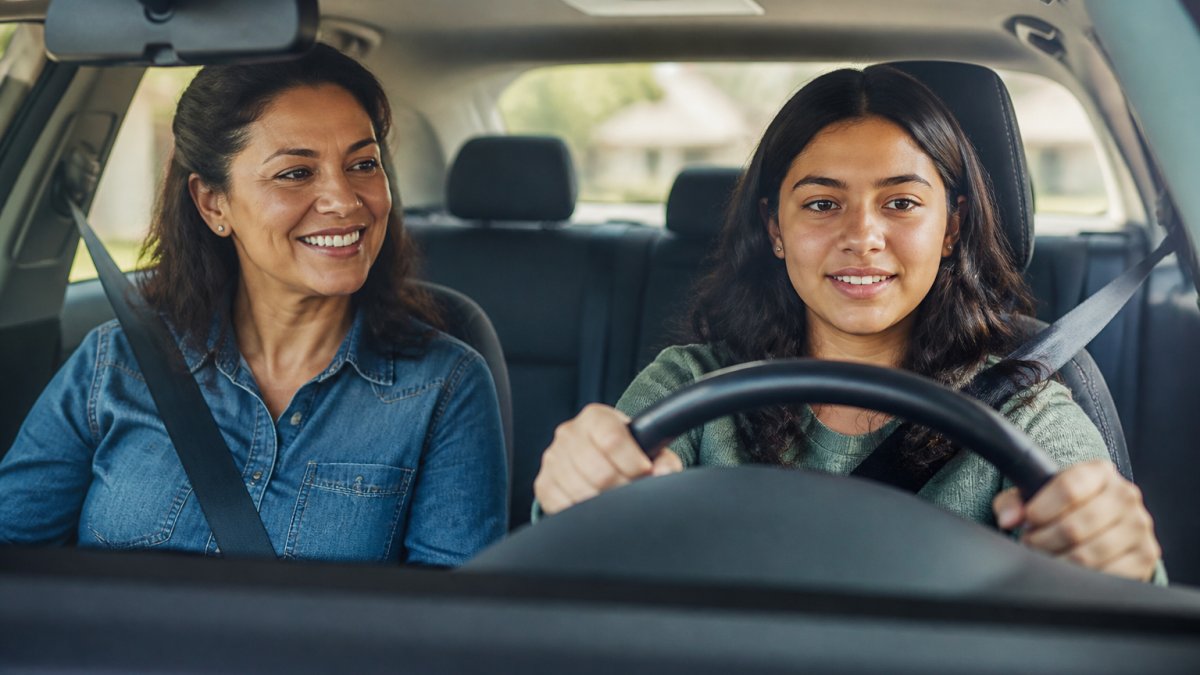
Supervised driving practice with a parent or guardian is different from both classroom instruction and professional behind-the-wheel training. This is where most learning happens, and it's the stage families are least prepared for, not because the rules are hard, but because nobody tells them what to practice, in what order, or how to know they're ready for the next step.
The Indiana GDL stages, in plain terms
Indiana's graduated driver licensing system moves a new driver through stages, each with its own rules. The BMV publishes the current version and is the only source to rely on for exact numbers, because the legislature can change them. The structure:
- Learner's permit stage (starts at 15). The teen drives only with a qualified supervising adult in the front seat. Indiana restricts who can supervise and limits passengers during this stage.
- Probationary license stage. After holding the permit for the state-required period and completing the required supervised driving, the teen can apply for a probationary license. This stage still carries restrictions, typically on nighttime driving and on passengers, that ease as the driver gains experience.
- Full, unrestricted license. Reached after the probationary period and any additional requirements are met.
The permit holding period is the part families underestimate. Indiana requires a minimum holding time before the road test plus a minimum number of supervised practice hours, a portion often required to be nighttime driving. Those hours are logged and checked, which is why a structured practice record matters from the first session.
Indiana BMV graduated driver licensing stages and supervised driving hours
Try the Free First Drive Kit →
A concrete practice structure that actually builds skill
Random driving doesn't build skill efficiently. A common coaching pattern sequences practice so each session adds one new demand while repeating the previous ones: Explore how to structure and plan supervised driving practice sessions with a parent or coach.
- Vehicle control first. Pre-drive checks, seat and mirror setup, smooth starts and stops, steering control in an empty lot.
- Low-speed precision. Parking, three-point turns, lane positioning, and backing up.
- Residential and light traffic. Scanning, following distance, signaling, and managing intersections.
One skill per session with a short debrief beats a long unstructured drive. The debrief consolidates learning: what went well, what to repeat, and what to leave until the basics are solid.
LearnerMiles guided practice membership helps you organize these sessions with 10 progressive lessons and a digital practice log so both the teen and the parent know what to work on and why.
The age-14 timeline, start to license
Here's how the stages line up by age, using Indiana's framework as the example:
- Age 14: Enroll in a BMV-approved classroom or online driver education course. Complete the classroom/online instruction. Study the state driver manual. Gather identity and residency documents. No permit, no behind-the-wheel instruction yet.
- Age 15: Apply for the learner's permit with proof of course enrollment or completion. Begin supervised driving with a qualified adult. Start the practice log on day one.
- During the permit stage: Accumulate the required supervised hours, including the nighttime portion, and hold the permit for the full required period. This is the longest stage and the one where structured practice pays off most.
What families can do before the teen turns 15
Before the permit, a family can:
- Confirm the current BMV requirements and download the state driver manual
- Compare approved classroom and online course formats and pick one that fits the family schedule
- Gather the identity, Social Security, and residency documents early, so the permit appointment is not delayed
Many families feel anxious about the driving process. That's normal and not a sign the teen isn't ready. Starting early takes pressure off: your teen has time to learn and build skills without rushing, and you have time to build a practice plan before the permit clock starts.
What 14-Year-Olds Can Do Now to Prepare for Licensing
At 14, you have time to prepare before the permit and license phases begin. Use it wisely.
Start driver education courses:
- Enroll in an approved online or classroom course
- Complete the 30-hour classroom requirement
- Finish before your 15th birthday if possible
Build knowledge:
- Study Indiana traffic laws and road signs
- Learn vehicle maintenance basics
- Understand defensive driving principles
Develop mindset:
- Talk openly with your parent or coach about driving anxiety
- Discuss expectations and communication during practice
- Practice relaxation techniques at home, not behind the wheel
Plan your permit timeline:
- Mark your 15th birthday on the calendar
- Schedule your vision test in advance
- Gather required documents early
Understand what comes after:
- Know the permit holding period in Indiana
- Learn the road test requirements
- Understand license restrictions for new drivers
Starting Your Guided Practice Journey at LearnerMiles
Preparing for the road doesn't have to feel overwhelming. Try your first interactive driving lesson free with a digital practice log to begin your guided practice journey.
LearnerMiles guided practice membership includes 10 progressive lessons, each building on the last, from vehicle checks and smooth starts to highway driving and night practice. The platform includes a Calm-Car Agreement that sets expectations between you and your teen, covering communication, boundaries, and what to focus on during practice.
The digital practice log tracks every session: what you practiced, how it went, and what to work on next.
You can also explore LearnerMiles books and printables for additional coaching resources and practice guides tailored to structured learning.
Indiana lets 14-year-olds start driver education right now: enroll in classroom or online courses and get ahead. Explore guided lessons and the digital practice log at learnermiles.com to build calm, structured driving skills from day one.
Frequently Asked Questions
Can a 14-year-old start driver's ed in Indiana?
Yes, 14-year-olds can enroll in driver's education courses in Indiana. However, enrollment in the course does not automatically grant permit or license eligibility. You must meet the minimum age requirements set by the Indiana Bureau of Motor Vehicles (BMV) to apply for a learner's permit or driver's license. Enrollment proves completion of the educational requirement, but the permit and license have separate age thresholds.
What is the minimum age for a learner's permit in Indiana?
Indiana requires you to be at least 15 years old to apply for a learner's permit. Proof of enrollment in an approved driver education program is one of the requirements. Once you turn 15 and meet all other eligibility requirements, you can apply at your local BMV branch. Contact your local licensing authority to confirm current requirements and any recent changes to age or permit rules.
What can 14-year-olds do to prepare for driving in Indiana?
At 14, you can enroll in driver education to complete the classroom and online instruction components. Many families use structured practice logs and guided lessons to make this preparation intentional and productive.
Does Indiana require driver education to get a license?
Yes, Indiana requires completion of an approved driver education program. This typically includes classroom instruction, online modules, and behind-the-wheel training. Proof of enrollment or completion is required when you apply for a learner's permit. Check with the Indiana BMV or your local licensing authority for the most current requirements and a list of approved providers in your area.
