
Table of Contents
- What Is Driver Rehabilitation for Older Adults?
- Who Benefits From Driver Rehabilitation
- Understanding Older Driver Assessment
- Working With a Driver Rehabilitation Specialist
- Adaptive Driving Equipment and Vehicle Modifications
- Returning to Driving After Stroke or Illness
- Building Confidence and Safe Driving Habits
- When Driving May No Longer Be Safe
- Frequently Asked Questions
Last Updated: October 16, 2026
What Is Driver Rehabilitation for Older Adults?
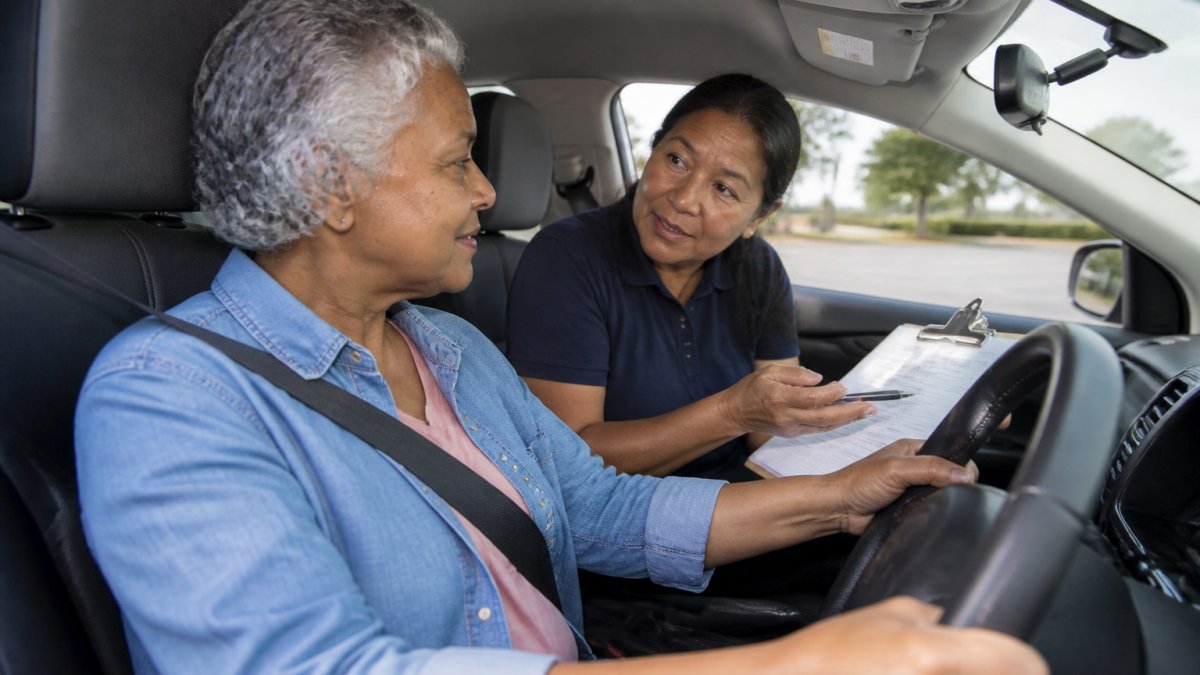
Driver rehabilitation for older adults is a specialized service that helps aging drivers assess their abilities and maintain safe driving skills. It combines professional evaluation, personalized training, and adaptive strategies to address the physical and cognitive changes that come with age.
As we age, vision, reaction time, flexibility, and concentration naturally shift. Driver rehabilitation acknowledges these changes without judgment.
A driver rehabilitation specialist works one-on-one to identify what's changed and what strategies work best.
This process typically involves three parts: an off-road clinical evaluation, a behind-the-wheel assessment on real roads, and a personalized plan that might include adaptive equipment, training, or recommendations about when and where it's safe to drive.
Who Benefits From Driver Rehabilitation
Older drivers benefit most when they notice changes in their driving confidence or ability. Common reasons to seek an evaluation include:
- After a medical event: stroke, heart attack, surgery, or hospitalization
- New medications: some prescriptions affect alertness, coordination, or vision
- Vision changes: cataracts, macular degeneration, or reduced peripheral vision
- Cognitive concerns: memory lapses, slower processing, or difficulty concentrating
- Physical limitations: arthritis, reduced range of motion, or weakness in legs or hands
- Confidence loss: feeling anxious on highways, in heavy traffic, or at night
- Family concern: adult children noticing unsafe driving habits or close calls
You don't need a medical diagnosis to benefit. Many older adults simply want to know where they stand, to get honest feedback about their current abilities and learn what adjustments could help.
A driver rehabilitation specialist can also help after a long break from driving. If you stopped driving for several years and want to return, an evaluation confirms you're ready and identifies any skills that need refreshing.
Understanding Older Driver Assessment
Assessment is the foundation of driver rehabilitation. A thorough evaluation tells you exactly what's working and what needs attention. Most assessments follow a two-stage process: clinical evaluation first, then behind-the-wheel testing.
Clinical Evaluation and Off-Road Assessment
The clinical phase happens in an office or clinic setting. A driver rehabilitation specialist (often an occupational therapist trained in driving assessment) reviews your medical history, current medications, and any concerns.
Tests typically cover:
- Vision screening: reading charts, peripheral vision, depth perception, and glare sensitivity
- Reaction time: how quickly you respond to visual or auditory cues
- Range of motion: flexibility in neck, shoulders, hips, and ankles
- Strength: grip, leg power, and ability to operate pedals
- Cognitive function: memory, attention, and ability to process information quickly
- Medication review: identifying drugs that impair alertness or coordination
This stage takes 1-2 hours. The goal is to identify physical or cognitive barriers before you get behind the wheel. If serious concerns emerge, the specialist may recommend stopping here and focusing on alternatives to driving instead of proceeding to the road test.
Behind-the-Wheel Evaluation
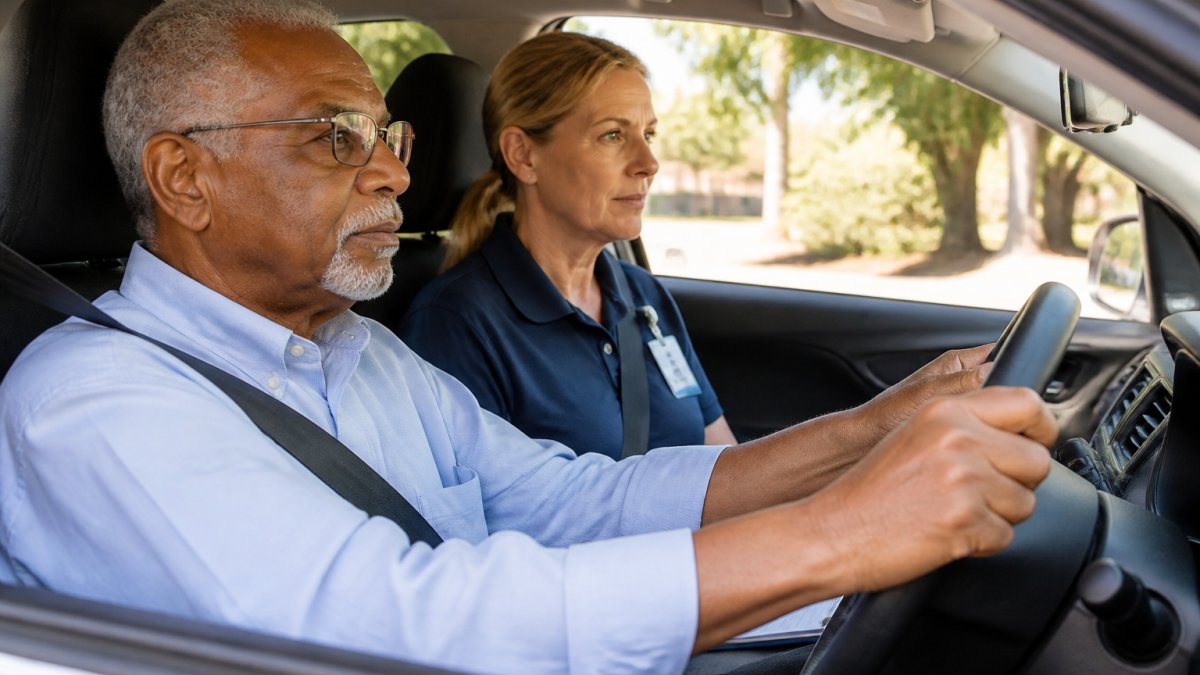
If the clinical evaluation shows no major red flags, the next step is a real-world driving test. You'll drive a specially equipped vehicle with a certified evaluator in the passenger seat. They'll observe how you handle:
- Basic vehicle control: starting, stopping, steering, and parking
- Traffic situations: merging, turning, responding to traffic signals and other drivers
- Hazard recognition: spotting pedestrians, cyclists, or unexpected obstacles
- Decision-making: choosing safe speeds, maintaining safe distances, and managing distractions
- Highway driving: if relevant to your needs
The evaluator watches without taking over unless safety is at risk. They note what you do well and where you struggle. The test usually lasts 45 minutes to an hour and covers a mix of quiet residential streets, busier roads, and highway driving.
Working With a Driver Rehabilitation Specialist
A driver rehabilitation specialist is typically an occupational therapist (OT) with additional training in driving assessment and adaptive driving strategies. They hold credentials like the Certified Driving Rehabilitation Specialist (CDRS) credential, which requires specific education and hands-on experience.
What to expect when you work with a specialist:
- Honest feedback: they'll tell you what they observe, even if it's hard to hear
- Respect for your independence: they understand that driving matters and won't push you toward retirement unless safety demands it
- Practical solutions: if you can drive safely with modifications or training, they'll help you find them
- Coordination with doctors: they may communicate findings to your physician if you consent
- Written report: you'll receive a detailed summary of the evaluation, findings, and recommendations
Finding a qualified specialist matters. Look for someone credentialed through the Association of Rehabilitation Drivers Specialists or similar professional body. Ask whether they hold the CDRS credential and how many older adult evaluations they perform annually.
Cost and insurance coverage vary widely. Some specialists work through hospitals or rehabilitation centers (often covered by insurance). Others are independent and may require out-of-pocket payment. Check with your insurance before scheduling.
Adaptive Driving Equipment and Vehicle Modifications
If your evaluation shows you can drive safely with adaptations, a specialist can recommend equipment that makes driving easier or safer. Common modifications include:
- Hand controls: for people with limited leg mobility or paralysis
- Left-foot accelerators: if right leg weakness or pain affects gas pedal control
- Steering wheel modifications: spinner knobs, reduced-effort steering, or smaller wheels for arthritis
- Seat lifts or cushions: to improve visibility or reduce pain
- Extended mirrors: for limited neck rotation
- Pedal extensions: if you're shorter or have limited hip/knee flexibility
- Dashboard controls: relocated buttons for easier reach
An occupational therapist can assess which modifications suit your needs. Installation typically happens at a specialized shop, and costs vary by equipment complexity. Some modifications are covered by insurance if medically necessary; others are out-of-pocket.
Test-drive any modification before committing. What works in theory may feel awkward in practice. A good specialist will help you find solutions that feel natural, not like you're fighting the car.
Try the Free First Drive Kit →
Returning to Driving After Stroke or Illness
Serious illness or injury often triggers the question: "Can I drive again?" The answer depends on how the event affected your physical ability, vision, cognition, and confidence.
After a stroke, for example, you might have weakness on one side, vision changes, or difficulty processing information quickly. A driver rehabilitation specialist can determine whether these changes prevent safe driving or whether training and adaptation make it possible.
The timeline varies. Some people recover driving ability within weeks. Others need months of physical therapy before an evaluation makes sense. Your doctor can advise when you're medically ready for assessment.
During recovery, don't rush back behind the wheel. Pushing too soon risks another accident, which can be traumatic and delay real recovery. Instead:
- Follow medical guidance on when driving is safe to attempt
- Schedule an evaluation once your doctor says you're ready
- Start with short, familiar routes if you do return to driving
- Practice with a trusted passenger who can offer feedback
- Build confidence gradually rather than jumping back to highway driving
Some people discover they can't drive safely again, even after recovery. That's not failure, it's honest assessment. Planning alternatives (public transit, rideshare, family help) ahead of time makes the transition easier.
Building Confidence and Safe Driving Habits
Confidence and safety aren't the same thing. You can feel confident but drive unsafely, or feel anxious while driving perfectly well. A good driver rehabilitation program addresses both.
After an evaluation, a specialist might recommend training to build or rebuild skills. This might involve:
- Refresher lessons on traffic rules, modern road signs, or new vehicle technology
- Desensitization practice for specific fears (highway driving, night driving, heavy traffic)
- Adaptive strategy training (how to compensate for vision loss or slower reaction time)
- Vehicle familiarization if you've switched to a car with unfamiliar controls
Training is different from driver education for new drivers. You're not learning from scratch, you're fine-tuning existing skills and adapting to changes. Sessions are usually shorter and more focused.
Confidence grows when you practice consistently and see measurable improvement. Small wins, successfully merging on a busy road, or driving at night for the first time in months, prove you're getting better. Keeping a practice log helps you track progress and organize your sessions, so you can look back and see how far you've come.
When Driving May No Longer Be Safe
Sometimes an evaluation reveals that driving isn't safe anymore. This is hard to accept, but it's important information.
Signs that driving should stop include:
- Serious cognitive decline: you get lost on familiar routes, forget where you're going, or can't follow traffic rules
- Severe vision loss: you can't see well enough to spot hazards or read signs
- Loss of physical control: you can't operate pedals or steering reliably
- Inability to react: you freeze in unexpected situations or don't notice approaching cars
- Multiple recent accidents or close calls: your driving record shows a clear pattern of unsafe behavior
When an evaluator recommends stopping, they're basing it on direct observation, not age, not assumptions, but actual demonstration of unsafe driving. Respecting this recommendation protects you and others on the road.
Stopping driving is a major life change. Plan ahead:
- Explore alternatives: public transit, paratransit services, rideshare apps, volunteer driver programs, family help
- Arrange transportation for essential trips (medical appointments, grocery shopping, social activities)
- Maintain mobility through walking, exercise classes, or other activities
- Stay connected by finding ways to visit friends and participate in community life
Many communities offer resources for older adults without personal cars. Ask your local senior center, Area Agency on Aging, or local public transit authority about options.
Driver rehabilitation isn't just about passing a test, it's about honest assessment and practical solutions that let you keep driving safely or transition thoughtfully when it's time to stop.
If you're returning to driving after time away or recovery, the LearnerMiles guided practice membership can help you organize your practice sessions, track progress, and rebuild confidence step by step.
Frequently Asked Questions
What is driver rehabilitation for older adults?
Driver rehabilitation is a structured program that helps older adults maintain or regain safe driving skills after illness, injury, or as part of routine skill refreshment. It combines clinical assessment, behind-the-wheel evaluation, personalized training, and adaptive equipment recommendations. The goal is to identify any physical, cognitive, or visual changes affecting driving ability and provide strategies to address them, allowing older adults to drive safely or make informed decisions about their mobility options.
How does an older driver assessment differ from a standard driving test?
An older driver assessment is comprehensive and specialized. Unlike a standard road test, it evaluates reaction time, attention, judgment, coordination, range of motion, and how medical conditions or medications affect driving. Assessments include clinical evaluation (vision, cognition, physical function), off-road testing, and behind-the-wheel evaluation in real traffic. This detailed approach identifies specific strengths and limitations, leading to tailored training or equipment recommendations rather than a simple pass/fail result.
Can an older adult return to driving after a stroke?
Many older adults do return to driving after stroke, but success depends on the severity and type of stroke, recovery progress, and individual function. A driver rehabilitation specialist evaluates strength, coordination, vision, cognitive function, and reaction time to determine readiness. Some people may need adaptive equipment (hand controls, left-foot accelerators) or modified driving routes. Others may benefit from structured retraining. A qualified evaluation is essential before attempting to drive, and family support throughout recovery helps build confidence and ensure safety.
How do I find a qualified driver rehabilitation specialist?
Look for occupational therapists certified in driver rehabilitation through the Association of Rehabilitation Programs in Automotive Mobility (ARPAM) or the Driving Rehabilitation Specialist Certification Board. Ask your primary care doctor, local hospital, or rehabilitation center for referrals. State vocational rehabilitation agencies and aging services may also provide lists. When contacting a specialist, ask about their assessment methods, experience with your specific condition, and what the evaluation process involves. Verify credentials and ask about insurance coverage before scheduling.