Quick Summary
Dashboard warning lights are the car's way of signaling a problem that needs attention, and their color shows urgency. Red lights mean a serious problem, so stop safely and turn off the engine, while amber or yellow lights call for a check soon. Check your owner's manual, since symbols vary by vehicle.
- Red warning lights signal a serious problem; stop safely as soon as you can and turn off the engine.
- Amber or yellow lights call for a check soon, and you can usually keep driving carefully to a safe stop.
- Lights that come on briefly at startup are a normal self-test; lights that stay on need action.
- Treat any light that changes color or behavior as more serious than the one you first saw.
- Your owner's manual is the final word on what each symbol means for your car.
Table of Contents
- Why Dashboard Warning Lights Matter Before You Drive
- Red, Amber and Green: How Color Signals Urgency
- Car Dashboard Symbols and Meanings You Should Know
- Yellow Car Warning Lights Meaning and What to Do
- Brake System Warning Light Meaning
- Pre-Drive Dashboard Check: A Quick Startup Checklist
- When to Pull Over Safely and Stop Driving
- Booking Your Next Practice Drive With Confidence
- Frequently Asked Questions
9 Dashboard Warning Lights to Check Before You Drive
Last Updated: November 21, 2026
Why Dashboard Warning Lights Matter Before You Drive
Your dashboard warning lights are the car's way of telling you something needs attention. Knowing what dashboard warning lights mean before driving can keep you safe and help you avoid a breakdown. At LearnerMiles, we think this is one of the most useful habits a new driver can build.
Many learners feel overwhelmed the first time a light flashes on. The panel looks busy, and it's hard to tell which symbols matter. This guide walks through the main lights, what their colors suggest, and what to do next.
Keep in mind that vehicles differ. Your owner's manual is the final word on what each symbol means for your car. Check it before you rely on any general guide, including this one.
Red, Amber and Green: How Color Signals Urgency
Most manufacturers use color to show how urgent a warning is. The general pattern works like this:
- Red: Serious problem. Stop safely as soon as you can and turn off the engine.
- Amber or yellow: Caution. Check the issue soon, but you can usually keep driving carefully to a safe stop.
- Green or blue: Information only. A system is on or working, such as headlights or cruise control.
A red light is never something to ignore. An amber light is a reminder to schedule a check, not a reason to panic. Treat any light that changes color or behavior as more serious than the one you first saw.
Car Dashboard Symbols and Meanings You Should Know
Symbols vary by make and model, but a few appear in almost every car. Learn these first:
- Check engine light: An engine or emissions fault. A steady light means get it checked soon. A flashing light can indicate a serious misfire, so reduce speed and get help.
- Oil pressure warning light: Low oil pressure. Stop safely and turn off the engine. Driving on low oil can cause serious engine damage.
- Engine temperature light: The engine is overheating or the coolant is low. Pull over, turn off the engine, and let it cool before you check anything.
- Battery or charging light: The charging system may not be working. You may have a few miles before the battery runs out.
- Brake system light: A brake fault or a low brake fluid level. This one needs prompt attention.
- Tire pressure light: One or more tires are low on air. Check the pressures when the tires are cold.
- Airbag light: A fault in the airbag system. The airbags may not deploy in a crash.
Yellow Car Warning Lights Meaning and What to Do
Yellow and amber lights ask for attention, not an emergency stop. Common examples include the tire pressure light, the traction control or stability control light, and the service-soon reminder.
Here is a simple plan when a yellow light appears:
- Note which symbol came on and whether it stays lit or blinks.
- Check your owner's manual for that symbol.
- Look for an obvious cause, such as a low tire.
- Schedule a service visit if the light stays on.
If the light goes off after a restart, the car may have detected a temporary issue. Still, have a mechanic look at it if it returns.
Lights That Are Normal at Startup
When you turn the key or press the start button, many lights come on briefly. This is a self-test, and it's normal. Most lights, including the check engine light, should turn off within a few seconds once the engine runs.
If a light stays on after startup, or if a different light comes on while you drive, take it seriously. Startup lights are a quick check. Lights that stay on are the signal to act. Once the car checks out, you can resume practice after a long break with a structured plan.
Yellow and amber lights ask for attention rather than an emergency stop. Here is how the common ones compare.
| Warning light | What it usually means | Suggested action |
|---|---|---|
| Tire pressure | One or more tires are low on air | Check pressures when the tires are cold |
| Traction or stability control | System active or a fault in the system | Note whether it stays on and check the manual |
| Service-soon reminder | Scheduled maintenance is due | Book a service visit |
| Steady check engine light | Engine or emissions fault | Get it checked soon |
Brake System Warning Light Meaning
The brake warning light is one of the most important to understand. It can mean the parking brake is still on, or it can mean a real brake problem, such as low brake fluid.
Check the parking brake first. If it's released and the light stays on, the brake system needs a professional inspection. Brakes that feel soft, spongy or slow to respond are a sign to stop driving and get help.
Watch out: Do not keep driving with a brake light on and assume the brakes will "just work." A brake fault can get worse without warning.
Pre-Drive Dashboard Check: A Quick Startup Checklist
Before every practice drive, take one minute to check the dashboard. This habit helps new drivers build good routines. Use this checklist:
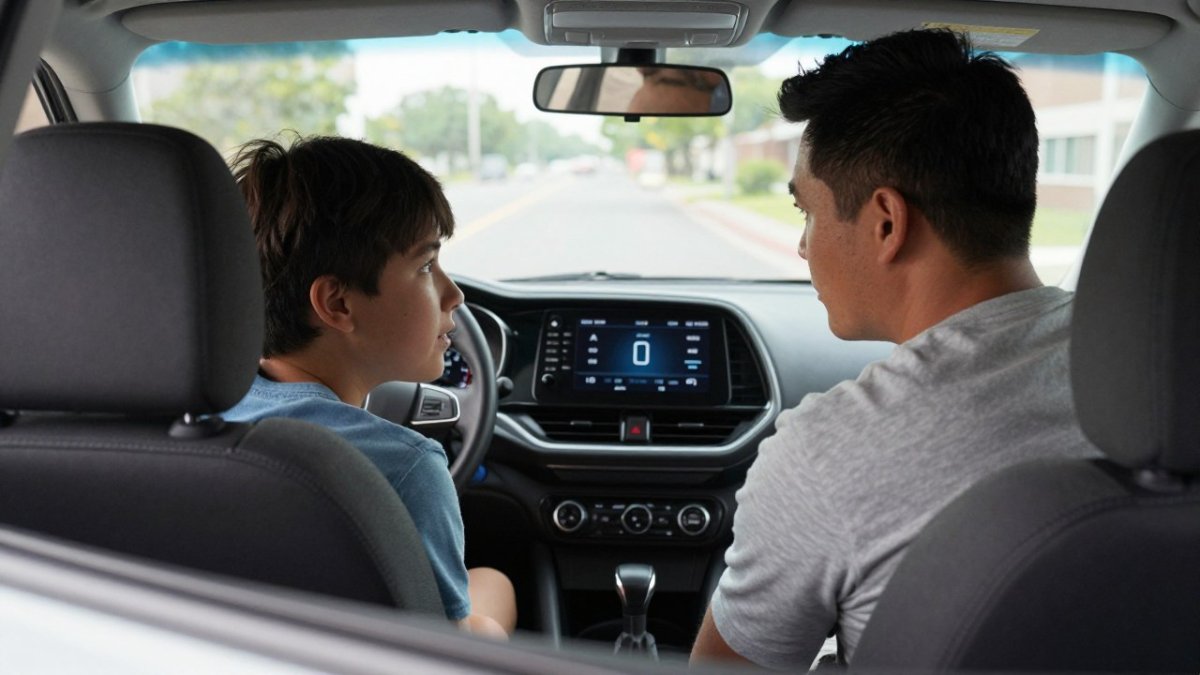
- Start the engine and watch the dashboard for the startup self-test.
- Confirm that the check engine, oil, battery and brake lights turn off.
- Note any light that stays on and check your owner's manual.
- Confirm the parking brake is fully released.
- Look at the tire pressure light and the fuel gauge.
- If a warning looks serious, do not drive. Call a qualified mechanic or your supervising adult.
A quick check before you leave is easier than a breakdown on the road. It also gives a learner a chance to talk through what they see, which builds confidence over time. A simple routine like this can be built into structured practice, such as the LearnerMiles guided practice membership.
When to Pull Over Safely and Stop Driving
The decision to stop is easier when you separate warnings into three urgency tiers rather than reacting to color alone.
Stop as soon as it is safe:
- Red oil pressure light (oil can symbol). Engine damage can occur within minutes.
- Red engine temperature light. Overheating can warp components.
- Red brake warning light combined with a soft, spongy or long pedal.
- Flashing check engine light. A flashing light signals an active misfire that can damage the catalytic converter; steady means inspect soon, flashing means reduce load and stop.
- Any light accompanied by smoke, a burning smell, a sudden loss of power, or steering that suddenly feels heavy.
Stop at the next safe opportunity, then decide:
- Steady check engine light with no drivability change. You can usually continue cautiously to a safe place or a service facility.
- Battery or charging light. The vehicle is running on battery reserve; range is limited and unpredictable, so head somewhere safe rather than starting a long trip.
- Tire pressure light. Slow leaks usually allow you to reach a safe spot; a rapid pressure loss or a visibly flat tire means stop.
Continue, but schedule attention:
- Steady ABS light with normal braking feel. You have conventional brakes, but no anti-lock assistance; allow extra following distance.
- Airbag or SRS light. The system may not deploy in a crash; drive normally and get it inspected.
- Traction control, stability control, or service-soon reminders.
Modern vehicles add a fourth category that older symbol guides miss: driver-assistance and sensor indicators. Lane-keeping, forward collision warning, blind-spot monitoring, and parking sensor icons often illuminate when a camera or radar is blocked by dirt, snow, or heavy rain, or when the system is simply switched off.
How to stop safely, in order:
- Signal early and check mirrors and blind spots.
- Reduce speed gradually; do not brake hard unless the situation demands it.
- Move to a shoulder, parking lot, or exit rather than stopping in a live lane.
- Turn on hazard lights once you are slowing.
- If you are on a highway shoulder, exit on the side away from traffic if you can do so safely, and stay belted until you decide your next move.
- Turn off the engine if the light is red, then consult the owner's manual.
Watch out: Do not open the hood or attempt repairs on a shoulder with traffic passing close by, and do not stand between the car and traffic. If the vehicle is in a live lane and will not move, stay belted, call for help, and follow the instructions of emergency services.
For a learner, a light appearing mid-drive is a confidence test as much as a mechanical one. The calmest response is to say what you see, pick a safe place, and stop there. For guidance on coaching a nervous learner through that moment, see the tips for parents and coaches. A coach can then talk it through with the car parked. Readers who feel overwhelmed on the road can explore step-by-step ways to reduce driving anxiety.
Booking Your Next Practice Drive With Confidence
Knowing your dashboard makes every practice drive calmer. Once you can read the warning lights, you can focus on the road and the next skill to build.
LearnerMiles offers guided practice lessons and a digital practice log that help learners and coaches track progress and plan the next session. For printable checklists you can keep in the glovebox or on the fridge, browse the LearnerMiles books and printables. Explore the lessons at learnermiles.com, and start with the free First Drive Kit at https://learnermiles.com/?page=firstdrive#first-drive-kit.
Frequently Asked Questions
What are some common warning lights on a dashboard?
Common dashboard warning lights include the check engine light, oil pressure warning, battery or charging system light, engine temperature warning, brake system warning, low tire pressure indicator and the airbag warning light. Many cars also show a seat belt reminder and an ABS warning light. Each symbol is shown in your owner's manual, which is the most reliable reference for your specific vehicle. If you are unsure what a symbol means before driving, check the manual before you head out, and do not ignore a light that stays on.
Should I drive if a warning light is on before I start the car?
A light that comes on briefly when you turn the ignition on is often a normal system self-test. A light that stays on after the engine starts, or that flashes, needs attention before you drive. Red warning lights usually signal a serious problem and call for stopping safely as soon as it is practical to do so. Amber or yellow lights often mean service is needed soon. If you cannot tell what a light means or the car behaves unusually, do not drive it until a qualified mechanic has checked it.
What do yellow or amber dashboard warning lights mean?
Yellow or amber lights generally signal a condition that needs attention but is not always an emergency, such as a check engine light, low tire pressure or a traction control issue. The car may still be safe to drive for a short distance, but you should have it inspected soon. A flashing amber light, or one that is paired with warning messages, can indicate a more urgent fault. Check your owner's manual for the exact meaning of each symbol on your dashboard before deciding how to proceed.
Why do dashboard warning lights come on when I turn the ignition on?
Most vehicles run a self-test when the ignition is turned on, lighting several warning symbols for a few seconds so you can confirm the bulbs and systems work. This is normal. The lights should go off once the engine is running and the systems report no faults. If a light remains on after startup, the system has detected a condition that needs checking. Because these checks vary by make and model, confirm what is normal for your car in its owner's manual.
