
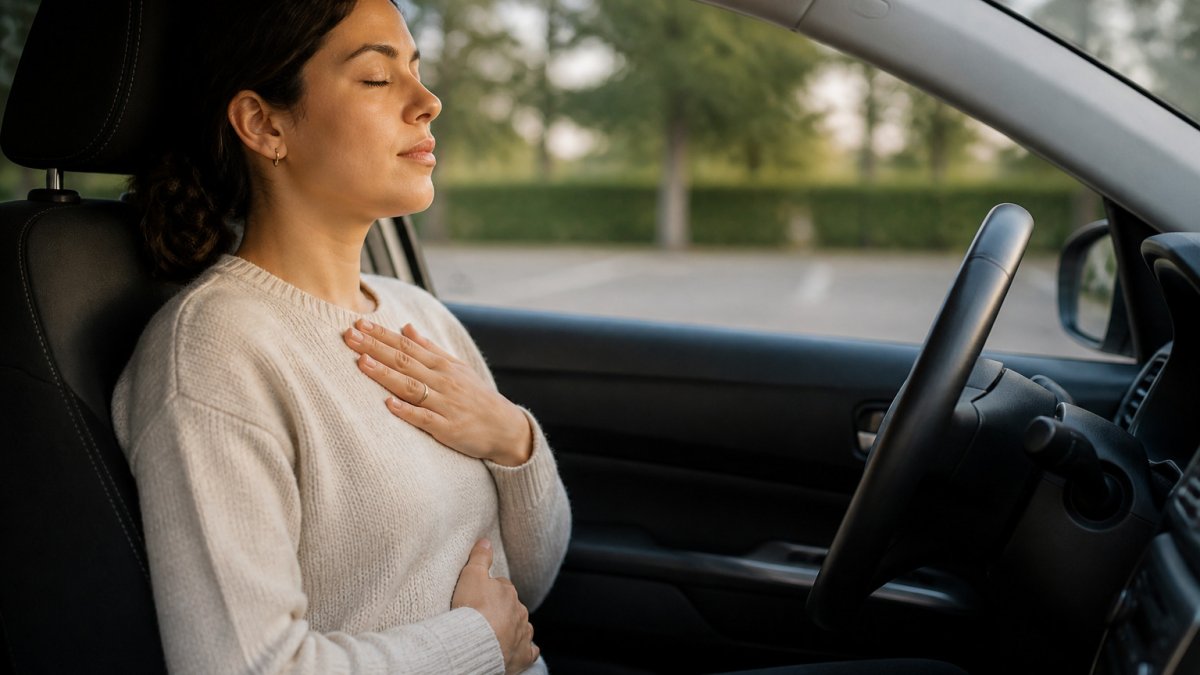
Last Updated: October 28, 2026
Quick Summary
Breathing exercises for driving anxiety are slow, relaxed breaths practiced at home or while parked, such as breathing in for about four counts and out for four to six. Use them before you drive, never as counted breathing while moving in traffic.
- Practice slow breathing at home for two to three minutes, sitting upright with feet flat.
- Breathe in through your nose for about four counts and out through your mouth for four to six.
- Do not hold your breath; keep breathing relaxed and natural.
- Use calming routines only while parked with the engine off or before leaving home.
- Pull over somewhere safe if anxiety builds, then breathe slowly before deciding whether to continue.
Table of Contents
- Why Driving Anxiety Shows Up in Your Body
- Step-by-Step Slow Breathing You Can Practice at Home
- Calming Techniques Before Driving
- Breathing Exercises for Stress During the Drive Itself
- Highway Driving Anxiety: Adapting the Routine
- How to Help Someone with Driving Anxiety
- Building a Practice Plan and Knowing When to Get Help
- Frequently Asked Questions
Why Driving Anxiety Shows Up in Your Body
Driving anxiety is common, and it often starts in your body before your mind catches up. Your heart may pound, your breath may turn short, and your hands may grip the wheel harder than they need to. These sensations do not, by themselves, establish whether you are a good or bad driver.
Learners and parents may describe a tight chest at the curb, a racing mind at the first intersection, or a feeling that they cannot think clearly. Knowing these body signals is one step toward deciding what to do next. Our step-by-step guide to overcoming driving anxiety walks through what to try and in what order.
Common signs include:
- Shallow or fast breathing
- Tight shoulders and jaw
- A racing heartbeat
- Sweaty palms on the steering wheel
- Trouble focusing on the road ahead
Watch out: Dizziness, chest pain, or feeling unable to breathe are not normal driving nerves. If these symptoms show up, get appropriate medical care and do not push through them behind the wheel.
Step-by-Step Slow Breathing You Can Practice at Home
Practice breathing when you are calm and safely settled in a chair or on a bed.
- Sit upright with your feet flat on the floor.
- Place one hand on your belly and one on your chest.
- Breathe in slowly through your nose for about four counts.
- Let your belly rise more than your chest.
- Breathe out slowly through your mouth for about four to six counts.
- Repeat for two to three minutes.
If the pattern feels uncomfortable, shorten the counts. Comfort matters more than a perfect number.
Counted breathing and longer exhales
Try a gentle rhythm, such as four counts in and six counts out, and keep it easy.
Do not hold your breath. Breathing should stay relaxed and natural.
| Practice Step | What to Do | How Often |
|---|---|---|
| Set up | Sit upright, hands on belly and chest | Before each session |
| Inhale | Slow breath through the nose | About 4 counts |
| Exhale | Slow breath out, slightly longer | About 4-6 counts |
| Repeat | Keep a steady, easy rhythm | 2-3 minutes at home |
Calming Techniques Before Driving
Use these techniques only while the car is parked and turned off, or at home before you leave. Never perform counted breathing or other relaxation exercises while you are moving or in traffic.
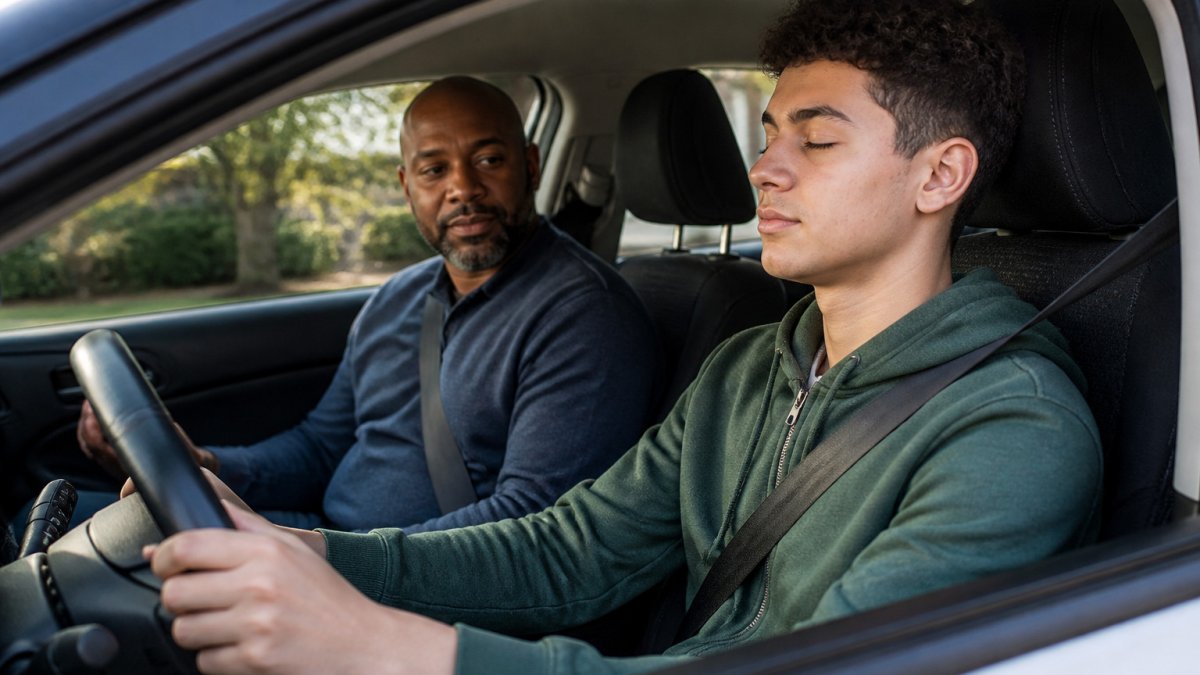
Here are four parked routines you can rotate depending on what you are facing.
Routine 1: Ordinary pre-drive jitters (about 60 seconds)
- Sit in the driver's seat with the engine off and your feet flat on the floor.
- Take three slow breaths, letting each exhale run a little longer than the inhale.
- Drop your shoulders, unclench your jaw, and loosen your grip on the wheel until your hands feel light.
- Name the first turn and the first stop out loud, then start the engine.
Routine 2: Before heavy traffic or a highway merge
Traffic and merging reward a plan more than a breathing pattern. While parked, decide the route, the lane you want, and the first safe exit or pull-off point. Then do two or three easy breaths and one body check: shoulders down, hands at nine and three, mirrors set.
Routine 3: Before a tunnel or bridge
Tunnels and bridges feel confining because you cannot pull over at will. Before you enter, while still parked or at a safe stop, take a few natural breaths and remind yourself of the plan: steady speed, eyes up, follow the lane. Do not hold your breath inside the tunnel; keep breathing normally and keep your eyes on the road.
Routine 4: After a near-miss or a frightening moment
If something shook you, do not try to breathe your way through it while driving. Pull over somewhere safe as soon as conditions allow, stop the car, and only then use slow breathing to settle. Give yourself a few minutes before deciding whether to continue. Stopping is a responsible choice, not a failure.
Our LearnerMiles guided practice membership includes a digital practice log. You can find more step-by-step ways to reduce driving anxiety in our breathing and calming resources.
Breathing Exercises for Stress During the Drive Itself
Once you are moving, keep your breathing light and natural. Focus on the road, your mirrors, and your speed. Do not close your eyes, count your breaths, or try a meditation technique while driving.
If you notice tension building, you can make small, safe adjustments:
- Relax your grip on the wheel, one hand at a time
- Keep your eyes up and scanning the road ahead
- Take one normal breath when the road is clear
- Turn down distractions like loud music or a phone
If you cannot keep control or concentrate, pull over somewhere safe as soon as conditions allow. Then rest, breathe slowly, and decide whether to continue. Stopping is a responsible choice.
Highway Driving Anxiety: Adapting the Routine
Highway driving brings higher speeds, merging, and less time to react. Practice the basic pattern at home first. Then build confidence gradually on quiet roads before trying faster ones.
Use a planned routine for highways. Choose a calm route at a set time, and take a short break at the next safe exit if you need one. Parents and coaches can help by agreeing on a clear signal for when to slow down or exit.
Build skill slowly with structured practice drills. Our guide to driving practice drills for new drivers can help you practice merging and lane changes step by step.
How to Help Someone with Driving Anxiety
Parents and coaches can support a nervous learner. Start by listening. Ask what feels hardest and what would help most.
Keep your instructions short and clear. Focus on one goal at a time. When the car is parked, review what went well before you discuss what to improve.
Some practical tips:
- Agree on a stop word or signal that means "pull over now"
- Use short directions early, such as "turn right at the next light"
- Praise specific effort, like "you checked your mirror well"
- Save corrections for a calm review when parked
For a fuller walkthrough, read our guide on how to teach a nervous teen driver. A coach who is also nervous can seek support from a qualified driving instructor. LearnerMiles provides optional professional Sassi Guidance.
Building a Practice Plan and Knowing When to Get Help
A simple practice plan can help organize practice. Pick one skill per session, such as parking or merging. Keep sessions short, end on a good note, and record what happened in your practice log.
A simple way to measure progress
A before-and-after rating is a personal gauge, not a test, and it does not prove readiness or replace required driver education.
What breathing can and cannot do
Be realistic about the limits. Breathing exercises do not replace supervised practice, required driver education, or qualified support. If a technique makes you feel worse, stop it and return to natural breathing.
Troubleshooting when a technique backfires
- Dizziness or lightheadedness: stop the exercise, breathe normally, and skip forceful or overly deep breaths.
- Breath-holding feels uncomfortable: skip holds entirely and use a gentle in-and-out rhythm instead.
- Respiratory conditions: check with a licensed health professional before trying longer or counted patterns.
- Rising anxiety during practice: shorten the session, return to an easier road, and try again another day.
When to get help
Get help if anxiety interferes with your daily life, if you avoid driving altogether, or if symptoms feel frightening. A licensed health professional or a qualified driving instructor can offer support. LearnerMiles can help you organize your practice, but it does not replace professional care or required driver education. Rules for supervised practice and required hours vary by jurisdiction, so check with your local licensing authority.
Ready to start a structured routine? Explore guided lessons and the digital practice log at learnermiles.com, or grab the free First Drive Kit.
Frequently Asked Questions
Can breathing exercises help with driving anxiety?
Practice the technique at home first, when you are relaxed. Breathing exercises do not replace professional help when anxiety interferes with daily life.
Is it safe to do breathing exercises while driving?
Keep any structured breathing exercise for when the car is parked and off. While driving, your attention needs to stay on the road, mirrors, and traffic. If you notice tightness or shallow breathing on the road, keep your hands on the wheel and eyes ahead, and focus on the next safe action. If you cannot keep control or concentration, pull over safely as soon as conditions allow and wait until you feel steady before continuing.
What breathing exercise can I practice before driving?
Sit comfortably in your parked car or at home, with your feet flat and shoulders relaxed. Breathe in slowly through your nose, then breathe out through your mouth. Stop if you feel dizzy and return to normal breathing.
What should I do if anxiety makes it hard to concentrate while driving?
If anxiety makes it hard to focus, stop driving as soon as you can do so safely. Pull over somewhere safe as conditions allow. Seek appropriate support before deciding whether to continue. Talk with your coach or a qualified professional if this happens often.
