
Reviewed October 15, 2026. Practical learning support, not a diagnosis or treatment plan.
For a nervous learner, a useful starting point is a manageable practice goal, suitable supervision and a clear plan for stopping safely. Confidence and driving ability are different: feeling calmer does not establish that someone can safely manage a particular road or maneuver.
Start with a conversation while parked
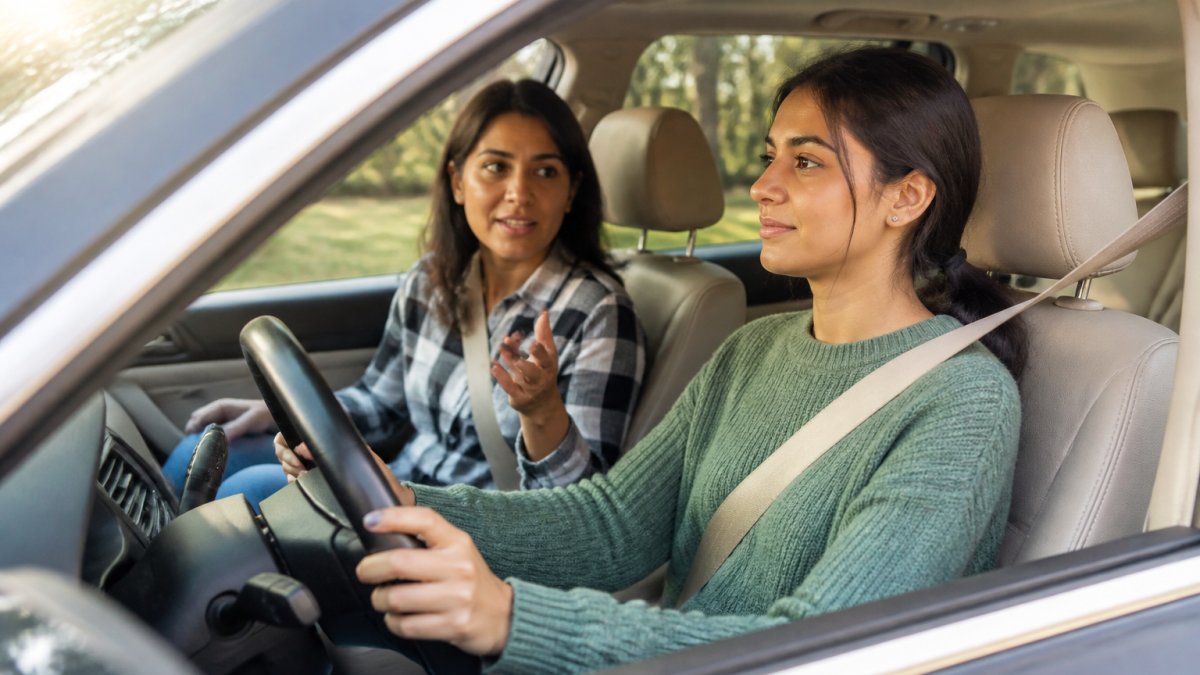
Tell your instructor or coach what feels difficult: identifying controls, turning, judging space or handling other traffic. Agree on one goal and explain the practice setting before moving. Use early, simple directions, and discuss mistakes after stopping safely.
A first session may consist entirely of learning controls in a secured, parked vehicle. Do not begin with the situation that frightens you most or move to faster roads just to meet a timetable. Choose the next step according to demonstrated vehicle control, legal permissions, supervision and conditions.
Keep calming exercises separate from driving
Try any clinician-recommended relaxation or grounding exercise at home or when safely parked. While moving, keep your attention on traffic, observation and vehicle control. Do not count objects, hold your breath, reach for comfort objects, tense your legs or change foot position as an anxiety exercise while driving.
Use your phone, practice log and videos only while parked. Set up navigation before departure and have your coach help with planning so you are not handling a device on the road.
If symptoms interfere with driving
If you cannot concentrate or control the vehicle safely, bring the vehicle to a safe stop as conditions allow. Avoid abrupt maneuvers and follow local road rules. Once safely parked, arrange support or another driver if needed. Do not resume because a fixed number of minutes has passed or because someone pressures you.
Do not assume new chest pain, fainting or severe breathing difficulty is anxiety. Seek urgent medical help for potentially serious symptoms. An article cannot determine whether you are medically fit to drive.
Use a modest practice record
After parking, record the skill attempted, prompts needed and what actually happened. An example might be: “Reviewed controls while parked; still uncertain about the gear selector. Next step: repeat with the instructor before moving.” This is an illustration, not a student result.
Use the first-drive planning guide and calm coaching guide to structure the conversation. Progress need not follow a fixed timeline.
Know when professional support is needed
If anxiety, panic or avoidance disrupts daily life or safe practice, speak with a qualified health professional. The National Institute of Mental Health describes evidence-based care, including psychotherapy. Treatment choices and any exposure work should be individualized with a clinician; driving instruction is not a substitute for that care.
A qualified driving instructor can help assess driving skills and plan suitable lessons. Check local medical-reporting or licensing requirements if a health condition affects driving.
How LearnerMiles can help
LearnerMiles provides illustrated practice lessons, saved logs and guidance for learners and coaches. It does not diagnose or treat anxiety, provide medical clearance or replace professional instruction. Try the free First Drive Kit or explore workbook membership.
Frequently Asked Questions
How can I stop anxiety before driving lessons?
Discuss your concerns while parked, choose a manageable goal with a qualified instructor or eligible supervisor, and agree on how to pause safely. No technique guarantees that anxiety will disappear before a lesson.
What should I do if I have a panic attack while driving?
Prioritize safe vehicle control and stop in a safe place as conditions allow. Once parked, arrange help if needed. Do not resume until you can concentrate and control the vehicle safely. New or severe physical symptoms may need urgent medical assessment.
Can gradual exposure help reduce driving anxiety?
A qualified clinician may use exposure-based treatment as part of an individual care plan. A driving instructor can separately help match practice to your skills. Do not attempt challenging roads as self-directed therapy when symptoms compromise safe driving.
When should I seek professional help for driving anxiety?
Seek a qualified health professional when anxiety or panic interferes with daily life or safe driving. A driving instructor helps with skills; medical and mental-health assessment belongs with a clinician. LearnerMiles is an educational practice companion.