
Last Updated: November 10, 2026
Quick Summary
Highway driving practice is best built in stages, starting with quiet highway segments and a single merge. Master the local skills of smooth speed control, lane centering and mirror checks first, then add longer drives, lane changes and busier traffic only once each stage feels routine.
- Confirm local driving skills are solid before any on-ramp practice.
- Use a staged readiness framework, moving forward only when the current stage feels routine.
- Keep a following gap of at least three seconds, and more in rain or heavy traffic.
- Run a signal, mirror and blind-spot check before every lane change.
- If you miss an exit, continue to the next one and turn around; never reverse or stop in a travel lane.
Table of Contents
- Why Highway Driving Feels Harder Than City Driving
- What New Drivers Should Practice Before Driving on the Highway
- How to Merge onto a Highway Step by Step
- How to Drive on the Highway Without Fear: Speed, Spacing and Lane Position
- Planning Routes, Exits and Unexpected Events
- Highway Driving Practice Checklist for Supervised Sessions
- Building a Progressive Highway Practice Plan With Your Coach
- Frequently Asked Questions
Why Highway Driving Feels Harder Than City Driving
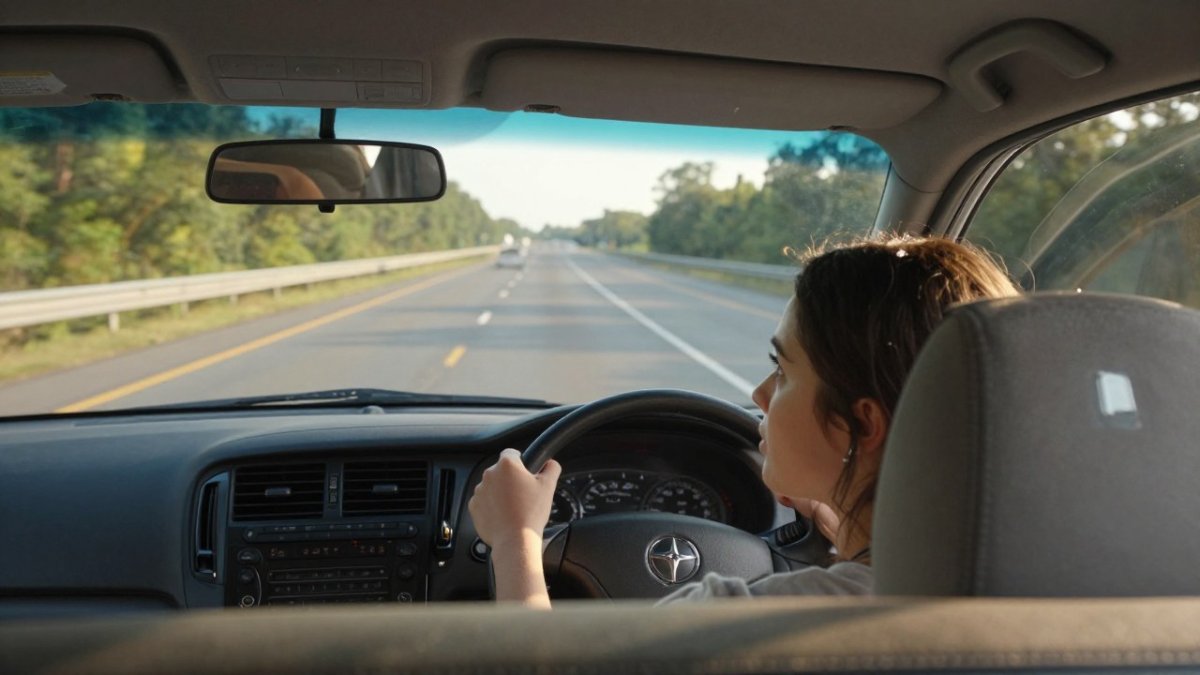
Highway driving practice is the first time many new drivers face speeds, traffic density and reaction windows that leave little room for error.
City driving rewards frequent, small corrections. Highway driving rewards anticipation.
Anxiety often makes this worse. A learner who feels overwhelmed may fixate on speed and miss the spacing and lane position that actually keep the car safe.
What New Drivers Should Practice Before Driving on the Highway
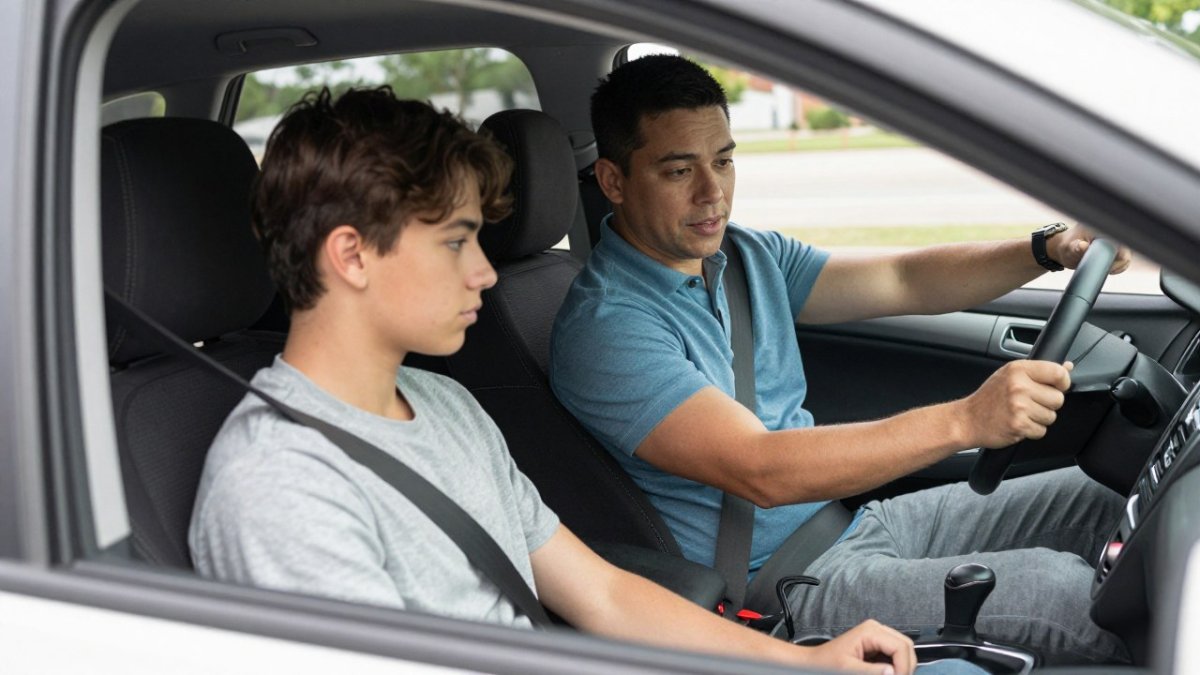
Before a learner touches an on-ramp, the foundation should already be solid. Most highway problems that look like "highway problems" are actually local-road skills that were never fully built. Practice these on quiet streets and low-traffic roads first:
- Smooth acceleration and braking that keeps the car steady through a full stop-and-go cycle without lurching
- Lane centering held consistently through gentle curves and past parked cars
- Mirror and blind-spot checks performed on every lane change, not just when you remember
- Turn signal habits used early and every time, including in empty parking lots
- Speed control that holds a steady pace without constantly checking the speedometer
A practical checkpoint: can the learner hold a steady speed and lane position for ten minutes on a familiar road while narrating what they see, what they plan to do next, and where the nearest escape space is? If not, more local practice comes first. If yes, they are ready to begin highway practice in short, supervised stages.
A Staged Readiness Framework
Rather than jumping from city streets to a busy freeway, build highway skill in stages.
- Stage one, quiet highway segments. Light traffic, a single merge, one exit. The goal is to feel the acceleration lane and the merge point without pressure.
- Stage two, longer segments with lane changes. Two or more lane changes per drive, practicing the signal-mirror-blind-spot sequence each time.
- Stage three, moderate traffic and multiple merges. Practice entering and exiting more than once per drive, and begin driving in light rain or at dusk when visibility is still good.
- Stage four, busier periods and unexpected-event practice. Higher traffic density, deliberate rehearsal of missed exits and sudden slowdowns, and driving in varied conditions.
At each stage, the coach and learner should agree in advance on what "ready to advance" looks like, for example, three consecutive drives where the learner merged without prompting and held a safe following distance without reminders. Writing that down keeps progress tied to demonstrated skill rather than to pressure or a fixed number of sessions.
Parents and coaches often skip the early stages because the highway feels like the real test. Stronger preparation makes the highway a continuation of skills rather than a new emergency.
For a broader view of the skills and steps covered in a complete road-readiness plan, see our how to pass driving test: 7 steps to success guide.
How to Merge onto a Highway Step by Step
Merging is the moment most learners dread, and it is also the most predictable maneuver when you break it into steps.
- Read the on-ramp early. Note the length of the acceleration lane and whether traffic is steady, heavy or stop-and-go.
- Build speed in the acceleration lane. Aim to match the flow of traffic before the lane ends, not after.
- Signal your intent well before you reach the merge point.
- Check your mirrors and blind spot for a gap in the right lane.
- Commit to the gap. If there is no suitable gap, slow down or hold back and look for the next opening. Stopping at the end of a short ramp is a valid choice when traffic is dense.
- Settle into the lane and adjust speed gently once you are in.
Common mistakes include merging too slowly, which forces other drivers to brake, and accelerating so hard that the car fishtails on a wet surface. Practice the sequence on a quiet ramp at off-peak times until the steps feel routine.
How to Drive on the Highway Without Fear: Speed, Spacing and Lane Position
Fear on the highway usually comes from uncertainty: not knowing how far ahead to look, how much space to leave, or where to sit in the lane. Replacing uncertainty with a few reliable habits helps.
Keep your eyes scanning well ahead, not fixed on the bumper in front of you. Settle the car into the center of the lane, and avoid driving on the painted lines.
Using a Safe Following Distance
A common guideline is the three-second rule: pick a fixed object the vehicle ahead passes, count three seconds after it passes, and make sure you reach the same object before finishing the count. Increase the gap in rain, fog, or heavy traffic. Learners who feel anxious often tailgate because they want the car ahead to act as a shield. A larger gap gives them time to react, which reduces the feeling of being rushed.
Handling Lane Changes and Blind Spots
Use a three-part check before every lane change: signal early, check the mirror and blind spot on the side you are moving toward, then move smoothly. Do not change lanes in the middle of a merge zone or while another car is alongside you in the next lane. If a lane change feels rushed, stay put and wait for a clearer gap.
Planning Routes, Exits and Unexpected Events
Highway confidence grows when the route is familiar and the unexpected has already been talked through. Before a practice drive, review the route, identify the exits you will use, and decide where you will move into the right lane to prepare. Set navigation before the car moves, never while driving, and turn on voice guidance so the learner is not reading a screen at speed.
Preparing for Exits and Recovering from a Missed One
Identify the correct exit early and move into the exit lane well before the gore area (the painted triangle where the exit splits from the highway).
If an exit is missed, the safe response is to continue to the next exit and turn around there. Do not reverse, stop in a travel lane, or cut across the shoulder or median.
Responding to Unexpected Events
Practice one scenario at a time with your coach narrating what to watch for.
- Sudden braking ahead. Brake early and steadily, check the mirrors, and preserve the gap behind you by not stopping abruptly if you can avoid it. If traffic stops completely, leave enough room to steer around the car ahead if needed.
- A vehicle entering your lane. Ease off the accelerator to open space rather than swerving. A small speed adjustment is safer than a sharp steering input at highway speed.
- Debris or an obstacle ahead. Avoid sudden swerves. A small, controlled lane change, after mirror and blind-spot checks, is safer than a panic maneuver. If you cannot avoid it, brake in a straight line.
- A tire problem or unusual vibration. Grip the wheel firmly, ease off the accelerator, and avoid hard braking. Move gradually toward the shoulder when it is safe, then stop well away from travel lanes and turn on hazard lights.
- A breakdown. Pull as far onto the shoulder as possible, turn on hazard lights, and stay in the vehicle with seat belts fastened unless staying put is unsafe. Call for help and follow local guidance on where to wait.
Watch out: a learner who fixates on the obstacle or the car ahead may not scan for an escape space.
In construction zones, slow down before the lane shift and follow the posted signs rather than reacting at the last cone.
For older drivers returning to highways, or drivers rebuilding confidence after time away, the same planning and scenario rehearsal applies at a slower pace.
Highway Driving Practice Checklist for Supervised Sessions
Use this checklist before and during each supervised highway session. It is a teaching aid for a parent or coach, not a substitute for any formal driver education your state requires.
- Vehicle check completed: tire pressure, fuel level, lights and mirrors
- Seat and mirror positions adjusted before leaving the driveway
- Seat belts fastened for everyone in the car
- Route reviewed, with exits and merge points identified
- Low-traffic time chosen for the first session
- Weather and visibility checked
Keeping a written record of each session makes progress visible and helps you decide when to advance to busier roads.
Building a Progressive Highway Practice Plan With Your Coach
Highway skill develops in stages, not in one long drive. A workable progression looks like this:
- Stage one: Quiet highway segments during light traffic, with a single merge and one exit.
- Stage two: Longer segments with two lane changes, practicing the three-part check each time.
- Stage three: Moderate traffic, multiple merges and exits, and practice on changing weather.
- Stage four: Busier periods, higher speeds where legally allowed, and deliberate practice of unexpected-event responses.
Move to the next stage only when the current one feels routine, not when a calendar says so.
Structured practice is also easier when expectations are written down. LearnerMiles offers a coach-learner communication agreement, a digital practice log and guided lessons that many families use to keep sessions consistent. Pair that with the driving anxiety reduction guide if a learner is struggling with nerves between sessions. Printed practice materials such as the LearnerMiles books and printables can also give a coach a simple paper log to take into the car.
For older drivers returning to highways, or drivers rebuilding confidence after time away, the same progression applies with a slower pace.
Laws, minimum ages, required practice hours and approved providers vary by jurisdiction. To get started with the free First Drive Kit, and to explore workbook membership, visit learnermiles.com.
The four stages below summarise how highway skill is built up gradually, with the focus of each stage.
| Stage | Focus | Typical conditions |
|---|---|---|
| Stage one | Feel the acceleration lane and one merge | Quiet segments, light traffic, one exit |
| Stage two | Practise the signal-mirror-blind-spot sequence | Longer segments, two lane changes |
| Stage three | Multiple merges and exits | Moderate traffic, changing weather |
| Stage four | Unexpected-event responses | Busier periods, higher speeds where legal |
Frequently Asked Questions
How should a beginner practice driving on the highway?
Start in low-traffic conditions with a supervising adult who is calm and experienced. Practice merging, maintaining steady speed and changing lanes in short, planned segments rather than long trips. Build up gradually as your comfort and skill grow, and stop the session when fatigue or distraction sets in. Check your local licensing authority for any rules about who may supervise and when a learner may drive on highways in your state.
What should new drivers practice before driving on the highway?
Practice the basics first: mirror and seat adjustment, smooth acceleration, braking, signaling and checking blind spots. Then rehearse merging from an on-ramp, keeping a steady speed and handling a lane change. A pre-drive check of the vehicle, including tire pressure and fuel level, helps build a routine. Keep a log of each session so you and your coach can see progress over time.
Should a beginner drive on the highway alone?
Whether a beginner may drive on a highway alone depends on the law where you live. Rules for learner and intermediate licenses, including supervision requirements and restrictions on highway or night driving, vary by jurisdiction. Confirm the current requirements with your local licensing authority, such as a DMV or MVA in the U.S. Even where solo driving is allowed, supervised highway practice first helps build the judgment that solo driving requires.
What is the best time to practice highway driving?
Mid-morning or mid-afternoon on a weekday, outside rush hour, often gives the lightest traffic on many highways. Avoid bad weather, low light and heavy holiday travel while you are building skill. As you gain confidence, practice at different times so you can handle varied conditions. Choose a route you already know, with clear signs and a manageable number of exits.
